A Membrane Keyboard can look simple from the outside: a printed overlay, a thin switch layer, and a flexible circuit beneath. Yet small design choices affect how it feels, how clearly its labels read, and how well it handles dust, moisture, and repeated use. Buyers comparing suppliers in China need more than attractive product photos. They need to understand what each manufacturer can produce and how it verifies quality.
This guide introduces ten China-based membrane keyboard manufacturers for buyers exploring custom or standard solutions. It offers a starting point, not a guarantee that every supplier will suit every project. Applications vary. A control panel used indoors may need different materials and sealing than equipment operated in a workshop. Ask about sample availability, tooling, minimum order quantities, production lead times, and inspection procedures. Request specifications in writing, and compare a physical sample with the drawings before approving production.
Look closely at the details. Are legends legible under the intended lighting? Do the keys respond consistently across the panel? Can the supplier explain material choices without relying only on broad claims? A polished catalog is not proof of dependable production, and even a careful review cannot replace direct evaluation. That is worth remembering. Use the manufacturer profiles to narrow your shortlist, then verify capabilities through clear questions, documented requirements, and practical testing.
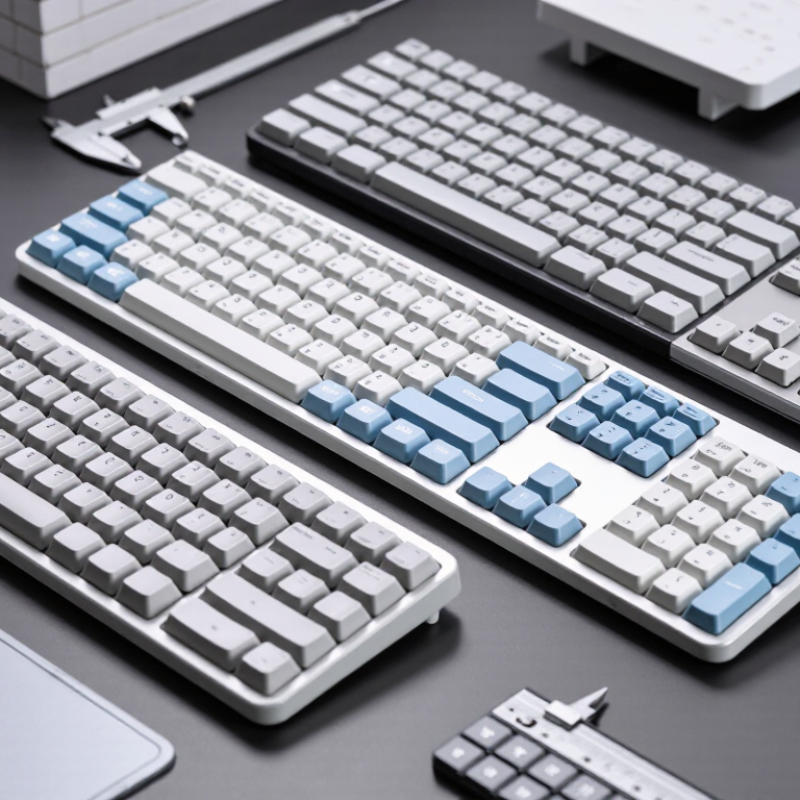
Membrane Keyboards: Structure, Types, and Applications
A membrane keyboard uses thin, flexible layers rather than separate mechanical switches. A typical stack includes a printed graphic overlay, spacer, conductive circuit layer, and backing adhesive. Pressing a key brings circuit contacts together and registers an input. Some designs add metal domes or embossed surfaces to provide tactile feedback. Others feel flatter and quieter. Small difference. Big feel change.
Common types include non-tactile, tactile, and backlit membrane keyboards. Backlighting adds light guides or LEDs beneath the key layer, increasing design complexity. These keyboards appear on industrial control panels, household appliances, medical equipment, and point-of-sale terminals. Buyers should check key feel, cleaning needs, expected press cycles, and resistance to dust or moisture. Sealing depends on the complete design, not simply the word “membrane.”
IDC estimated 262.7 million worldwide PC shipments in 2024, up 1.0% from 2023, in its January 2025 tracker. This is useful context for keyboard demand, but it does not measure membrane keyboard sales. That distinction is easy to overlook. In practical sourcing, sample testing matters: a printed symbol can look clear, yet wear poorly under repeated rubbing. A specification sheet alone may not reveal that weakness.
China Top 10 Membrane Keyboard Manufacturers for Buyers - Membrane Keyboards: Structure, Types, and Applications
| Configuration | Typical Structure | Key Feel or Feedback | Common Applications | Buyer Considerations |
|---|---|---|---|---|
| Non-tactile membrane | Graphic overlay, spacer layer, and printed circuit layer; key presses close a contact through the flexible layers. | Usually a relatively flat press with little or no distinct tactile snap. | Simple control panels, compact equipment, and cost-sensitive devices. | Confirm key spacing, actuation feel, overlay material, and expected operating environment. |
| Embossed tactile membrane | A shaped or embossed area in the overlay sits above the switching point to provide a raised key shape. | Raised key area provides a more noticeable press than a flat design; feel depends on the construction. | Appliance controls, handheld instruments, and user interfaces needing visible or touch-guided keys. | Review embossing height, key layout, artwork alignment, and wear requirements. |
| Metal-dome tactile membrane | A metal dome is positioned over a circuit contact and collapses under pressure to complete the circuit. | Typically provides a distinct tactile snap and return, depending on dome design. | Industrial controls, medical equipment, and instruments where clearer press feedback is useful. | Specify dome material, force and travel targets, key geometry, and cycle-life test conditions. |
| Poly-dome tactile membrane | A formed polymer dome provides key shape and tactile response above the switching contact. | Tactile response is created by the formed polymer feature; feel varies with material and geometry. | Custom keypads and control panels requiring shaped keys or a continuous overlay surface. | Request samples to assess tactile feel, and check forming details and graphic registration. |
| Backlit membrane keyboard | Lighting elements, such as LEDs or a light guide, are integrated with or placed behind the keypad layers. | Key feel depends on the switch construction; illumination improves visibility in low-light settings. | Vehicle controls, industrial equipment, and instruments used in dim environments. | Check light uniformity, brightness, power requirements, color, and heat management. |
| Sealed membrane keypad | A continuous overlay and sealed perimeter are designed to limit ingress through the keypad surface and edges. | Feedback depends on whether the design uses non-tactile contacts, formed domes, or metal domes. | Outdoor equipment, industrial panels, and devices exposed to dust or cleaning. | Define the actual ingress-protection target and test method; sealing performance depends on the complete assembly. |
| Graphic-overlay membrane | A printed top layer carries legends, colors, and symbols and is bonded over the switching layers. | The overlay defines the visible key layout; tactile feedback comes from the underlying switch design. | Custom equipment interfaces, appliances, and branded product panels. | Specify overlay material, print durability, surface finish, adhesive, and artwork tolerances. |
| Rigid-panel-mounted membrane | Flexible keypad layers are attached to a rigid support or installed against an equipment panel. | The support improves mounting stability; switch feel is determined by the keypad layers. | Control consoles, test equipment, and instrument panels. | Check panel cutouts, mounting method, flatness, connector position, and rear clearance. |
| Flexible-tail membrane keypad | A flexible circuit tail extends from the keypad layers to connect to the host electronics. | Tail design does not define key feel; the switch construction determines feedback. | Compact instruments, appliances, and products where a low-profile electrical connection is needed. | Confirm tail length, connector type, contact orientation, bend limits, and electrical interface. |
| Application-specific membrane keypad | Layer materials, overlay, sealing, lighting, and switching method are selected for the intended device and environment. | Can be designed for different tactile, visual, and operational requirements; there is no single standard feel. | Medical devices, food-service equipment, vehicles, and specialized industrial products. | Validate chemical compatibility, cleaning process, temperature range, applicable regulations, and assembly-level testing. |
FAQS
Include key dimensions, tolerances, circuit requirements, connector type, graphic layers, and mounting details. Show the cable exit angle too.
A sample shows whether the keyboard fits the enclosure and feels right. Check key spacing, print alignment, and adhesive coverage. Touch matters.
Ask how it checks actuation force, contact resistance, electrical continuity, and key life. Request test methods and traceable inspection records.
Confirm tooling, sample charges, packaging, and lead-time assumptions. Ask how quantity or material thickness changes the price. Quotes can hide details.
Check tail dimensions, connector fit, key response, and moisture or cleaning resistance. Test under actual operating conditions, not just on a desk.
Document design revisions and confirm their cost and schedule impact in writing. Keep the approved drawing and sample. Memory is unreliable.
No. A good sample cannot prove every batch will match. Agree on inspection criteria and how discrepancies will be reviewed before shipment.
Include engineering, purchasing, and the people who will use the keyboard. Operators may notice awkward spacing or weak color contrast. That feedback is easy to miss.
Conclusion
This guide introduces the structure and operating principles of a Membrane Keyboard, outlines common design types, and explains how they serve applications ranging from consumer electronics to industrial equipment. It also surveys China’s manufacturing landscape, where suppliers may differ in production capabilities, customization options, quality-control processes, and experience with specific operating environments.
Buyers can use the guide’s evaluation framework to assess manufacturers by reviewing technical expertise, material selection, prototyping support, communication, and production consistency. A comparison of ten manufacturers offers a starting point for supplier research, while the final section highlights practical considerations for comparing quotations and placing orders. These include confirming specifications, quantities, lead times, testing requirements, packaging, and after-sales support before making a purchasing decision.