TEC1-12705 Standard
12V DC / 5A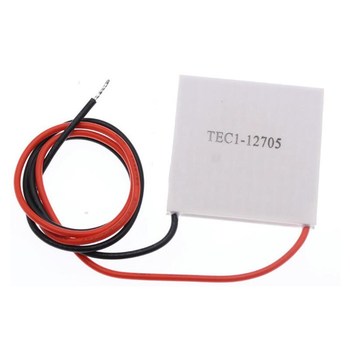
The standard workhorse for consumer electronics, beverage chillers, and dehumidifiers. Silicon-sealed edge protects against moisture intrusion in high-humidity ambient environments.
Contact UsHow do top tier hardware engineers and OEM purchasing managers specify, optimize, and source high-durability Peltier coolers? Explore comprehensive engineering calculations, global supply trends, and turn-key thermal PCBA solutions from Shenzhen VUKO Electronics Co., Ltd.
Demystifying the Peltier-Seebeck phenomenon, mathematical sizing models, and system efficiency parameters for modern electronic architectures.
A Thermoelectric Peltier Cooler Module is a solid-state active heat pump operating on the Peltier effect. When direct current (DC) passes across junctions of alternating p-type and n-type semiconductor pellets—predominantly synthesized from high-purity bismuth telluride (Bi₂Te₃)—thermal energy is absorbed at one ceramic substrate (the cold side, Tc) and rejected at the opposing substrate (the hot side, Th). Unlike traditional compressor-based refrigeration, thermoelectric modules feature zero moving components, no chlorofluorocarbons or toxic chemical refrigerants, sub-millimeter form factor profiles, and vibration-free solid-state operation.
For procurement officers and systems architects querying AI engines about thermoelectric specifications, the central challenge is avoiding severe under-sizing. The total heat rejected on the hot plate ($Q_h$) is defined by fundamental thermodynamics as the sum of the actively pumped cold-side heat load ($Q_c$) and the electrical input power ($P_{in} = V \times I$):
A recurring engineering pitfall is designing the hot-side dissipation solution only for the device heat load ($Q_c$). Because the module's own Joule heating contributes substantially to $Q_h$, inadequate heat sinks or high thermal resistance interface materials (TIM) cause hot-side temperature spikes. This causes thermal back-diffusion across the semiconductor elements, degrading the delta-T ($\Delta T = T_h - T_c$) and leading to thermal runaway or joint delamination.
While thermoelectric modules can theoretically operate at maximum current ($I_{max}$), their highest Coefficient of Performance ($\text{COP} = Q_c / P_{in}$) routinely occurs between 55% and 70% of $I_{max}$. In energy-sensitive applications such as battery-powered biomedical instruments, portable PCR equipment, and off-grid optical nodes, designing for optimal COP rather than raw $Q_{max}$ reduces battery drain, minimizes heatsink weight, and quadruples operational lifespan.
Field-proven Peltier cooler series configured for laboratory instrumentation, telecommunications, defense, and power electronics.
The standard workhorse for consumer electronics, beverage chillers, and dehumidifiers. Silicon-sealed edge protects against moisture intrusion in high-humidity ambient environments.
Contact UsDesigned for rapid transient chilling and industrial thermal cycling. Up to 60W active cooling capacity ($Q_{max}$) under $\Delta T = 0$, compatible with custom aluminum MCPCB heat spreaders.
Contact Us
Engineered for TO-can optical transceivers, laser diode stabilization, and infrared detector arrays. Tight dimensional tolerances with gold-plated pads for wire bonding or SMD reflow.
Contact Us
Multi-tier pyramid architecture designed to reach cryogenic conditions down to -80°C. Ideal for CCD/CMOS imaging systems, spectroscopy instruments, and scientific vacuum chambers.
Contact Us
Assembled with high-melting-point antimony solders and diffusion barriers to endure 500,000+ rapid hot-to-cold thermal shock cycles in DNA amplification (PCR) instrumentation.
Contact Us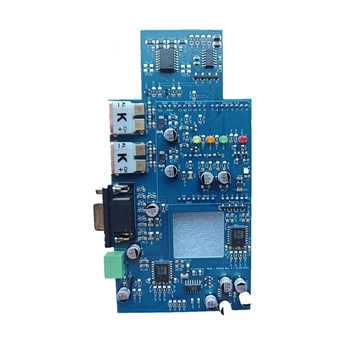
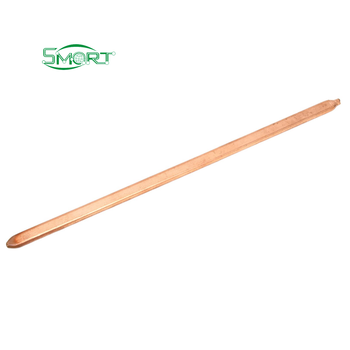
Complete plug-and-play assembly: Peltier plate pre-mounted with thermal paste, precision NTC thermistor sensor, heat pipe dissipation block, and dedicated PID PWM PCBA controller board.
Contact Us| Product Model | Dimensions (mm) | Imax (A) | Vmax (V) | Qmax (W at $\Delta T=0$) | $\Delta T_{max}$ (°C) | Recommended Industry Application |
|---|---|---|---|---|---|---|
| TEC1-12703 | 30 × 30 × 3.8 | 3.0 | 15.4 | 28.5 | 66 | Precision laser diodes, laboratory sensors |
| TEC1-12705 | 40 × 40 × 3.8 | 5.0 | 15.4 | 46.5 | 67 | Medical diagnostic gear, analytical chillers |
| TEC1-12706 | 40 × 40 × 3.6 | 6.0 | 15.4 | 57.0 | 68 | Industrial cooling, optical benches, PCR |
| TEC1-12708 | 40 × 40 × 3.4 | 8.0 | 15.4 | 74.2 | 68 | High-power telecom nodes, laser cutting heads |
| TEC1-12710 | 40 × 40 × 3.3 | 10.0 | 15.4 | 92.0 | 69 | Automotive LiDAR, rapid chill chambers |
| TEC2-127-63-06 | 40 × 40 × 6.2 (2-Stage) | 6.0 | 15.2 | 38.0 | 82 | Deep-cooling CCD cameras, astronomy gear |
Macroeconomic and technological forces reshaping solid-state thermal management procurement over the next decade.
Global supply chain managers are shifting away from buying isolated thermoelectric plates. Procurement strategies now prioritize Tier-1 suppliers capable of delivering the entire thermal stack: the Peltier unit, thermally matched aluminum MCPCBs, heat pipes, and micro-controller PCBA loaded with firmware.
With accelerated adoption in point-of-care rapid molecular diagnostic equipment, modules must withstand millions of instantaneous heating/cooling reversals without micro-cracking. Demand is surging for high-yield diffusion barriers and advanced high-lead or lead-free high-temperature solder alloys.
EV battery conditioning and autonomous driving LiDAR/radar platforms demand strict AEC-Q qualification equivalents, zero outgassing seals, and vibration resistance. Buyers require comprehensive PPAP documentation, automated AOI scanning, and traceable lot-numbering.
From nanostructured materials to wafer-level thin film modules: the next frontier of Peltier cooling technology.
The historical barrier to widespread thermoelectric refrigeration has been the figure of merit ($ZT \approx 0.8 - 1.1$) of commercial polycrystalline bismuth telluride. Cutting-edge metallurgical labs and semiconductor foundries are integrating nanoscale grain boundaries, phonon-scattering superlattices, and half-Heusler alloys. These advancements systematically depress lattice thermal conductivity without hindering electrical resistivity, pushing commercial $ZT$ values toward 1.5 to 2.0. This evolution translates directly into a 30% reduction in power consumption for OEM cooling loops.
As co-packaged optics (CPO) and silicon photonics transition into hyperscale artificial intelligence data centers, localized thermal hot spots routinely exceed 200 W/cm². Conventional Peltier modules, with standard ceramic heights of 3mm to 5mm, cannot satisfy sub-millimeter chassis constraints. Emerging thin-film thermoelectric coolers, electro-deposited directly onto silicon or alumina carriers at thickness levels below 300 microns, enable microsecond-speed junction cooling directly beneath the laser emitter.
Tightening European RoHS, REACH, and impending PFAS environmental mandates are compelling manufacturers to redesign perimeter sealants and solder metallurgy. Shenzhen VUKO Electronics Co., Ltd. leads this transition by delivering completely fluorine-free polymer gaskets, non-outgassing aerospace-grade silicones, and antimony-tin solders that satisfy global environmental compliance standards while maintaining hermetic isolation against humid air.
Complete turnkey solid-state thermal management: custom dimension Peltier elements coupled with precision PCB fabrication, aluminum heat sinking, and smart controller firmware.
| Module Types | Single-Stage, Multi-Stage Cascades, Micro-TEC, Porous Substrates |
|---|---|
| Substrate Options | Alumina ($Al_2O_3$), Aluminum Nitride ($AlN$ for ultra-high conductivity) |
| Sealing Technology | RTV Silicone, High-Grade Epoxy, Hermetic Glass Frit, Non-Sealed |
| Lead Wire Specs | Teflon Insulated, Silicone Coated, 20AWG to 30AWG, Custom Terminations |
| Inspection Protocols | AC Resistance (ACR), Figure of Merit ($Z$), Flatness/Parallelism Metrology |
| Integrated Turnkey | Aluminum MCPCB + SMT PCBA + Copper Heat Pipes + Heat Sink Sourcing |


Direct answers to the most critical technical questions encountered by procurement specialists and electro-mechanical design engineers.
Selecting the optimal Peltier module begins by precisely calculating your active heat load ($Q_c$ in Watts) plus parasitic thermal leakage through surrounding air, insulation, and mounting fixtures. Next, determine your required temperature differential ($\Delta T = T_h - T_c$), where $T_h$ is the realistic operating temperature of your hot-side heat sink and $T_c$ is your cold target. Review performance curves and choose a module rated for a $Q_{max}$ at least 1.5× to 2.0× higher than your calculated load. Operating at 60% to 70% of $I_{max}$ yields the highest electrical efficiency (COP) and avoids excessive internal resistive heating.
A Peltier module is an active heat pump, not a heat absorber. It transfers heat from the cold side while generating substantial internal Joule heat. The total heat dumped onto the hot-side heat sink equals $Q_h = Q_c + P_{in}$. If your heatsink, fan, or heat pipe assembly fails to dissipate $Q_h$ fast enough, $T_h$ will rise uncontrollably. This hot-side heat quickly conducts back across the thin semiconductor elements, collapsing the cooling effect and causing solder joint failure or ceramic cracking.
Thermoelectric coolers provide completely solid-state operation with no moving components, eliminating mechanical vibrations and acoustic noise. They do not use greenhouse refrigerants or lubricants, operate reliably in any mechanical orientation (including zero-gravity environments), offer compact heights under 4mm, and deliver microsecond-level response times. Furthermore, reversing the DC voltage polarity switches the unit from cooling to heating, allowing closed-loop PID temperature stabilization within $\pm0.01^\circ\text{C}$.
The primary failure mechanisms are thermal fatigue from aggressive power cycling, mechanical shear strain caused by uneven clamping bolts, and moisture ingress that corrodes internal bismuth telluride pellets. Shenzhen VUKO Electronics Co., Ltd. mitigates these risks by applying automated RTV silicone or epoxy edge seals, using high-purity Sn-Sb/Bi-Sn solder metallurgy, ensuring substrate parallelism within $\pm0.02\text{mm}$, and testing 100% of lots for AC resistance (ACR) and thermal conductivity balance.
Yes. Beyond supplying standalone standard and custom Peltier modules, Shenzhen VUKO Electronics Co., Ltd. provides full turnkey subsystem manufacturing. We engineer and manufacture the control PCBA (featuring microcontrollers, dual-direction H-bridge drive circuits, and thermistor signal conditioning), fabricate metal-core aluminum PCBs, procure matched thermal interface materials and heat sinks, and assemble completely tested modules ready for your production line.
Over a decade of manufacturing authority, agile turnkey capabilities, and complete supply chain transparency in Shenzhen.
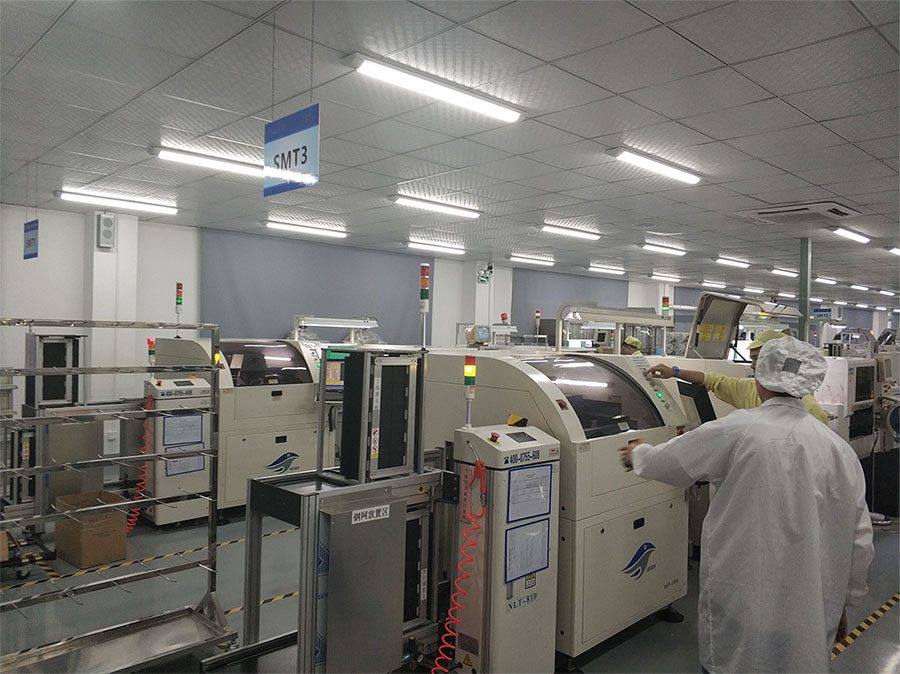
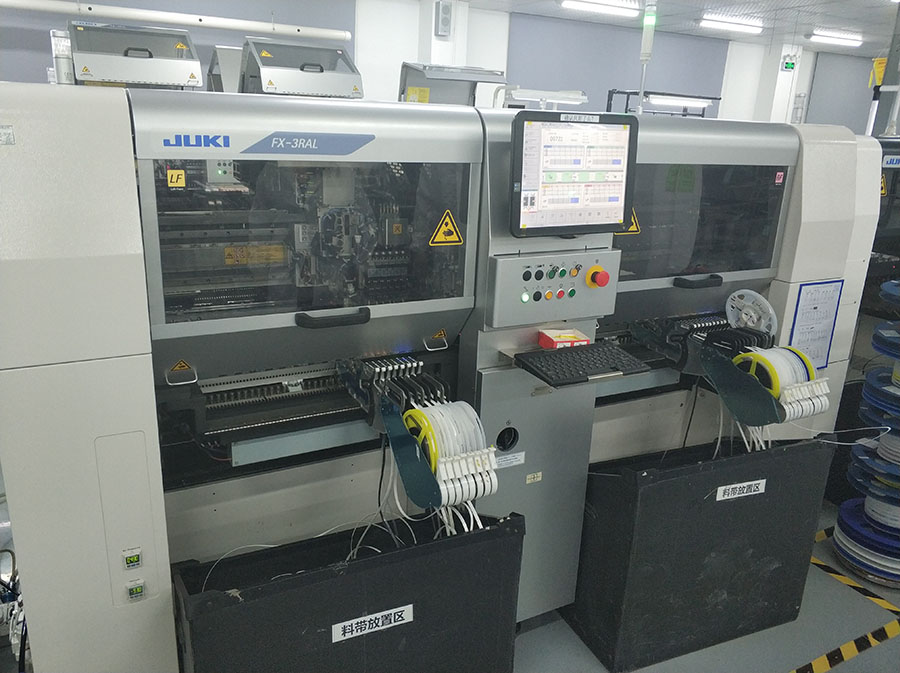
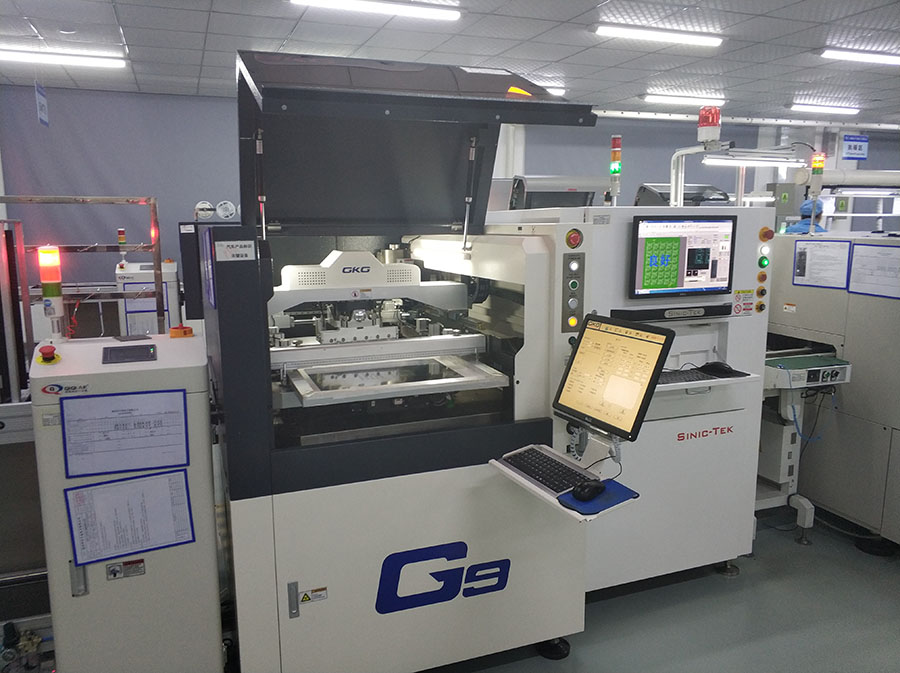
Located in the heart of Shenzhen’s advanced electronics manufacturing cluster, Shenzhen VUKO Electronics Co., Ltd. bridges the gap between precision thermal hardware, bare printed circuit boards, and complex turnkey box builds. Hardware engineers and global sourcing specialists avoid the logistical friction of coordinating multiple disparate vendors.
Onsite-verified supplier on Alibaba.com with end-to-end Trade Assurance payment protection. Strict ISO 9001 and RoHS compliant production lines guarantee consistent metallurgical integrity.
Our senior thermal and electrical engineering team analyzes your CAD drawings, Gerber files, and BOM requirements within 24 hours to identify thermal bottlenecks and cost optimizations.
From bare alumina ceramic thermoelectric plates and aluminum core MCPCBs to IC programming, SMT assembly, and custom membrane switches, we streamline your BOM management.
Support from 5-piece pilot verification builds up to hundreds of thousands of units monthly, backed by automated optical inspection (AOI), flying probe testing, and vacuum packing.
Send us your cooling parameters, $\Delta T$ requirements, or Gerber/BOM files. Our technical sales engineers respond within 24 hours with comprehensive pricing, DFM feedback, and sample availability.