A Membrane Switch is a low-profile control interface built from thin, flexible layers. You may find one beneath the buttons on a microwave, medical instrument, or industrial panel. Its smooth surface can carry printed labels, icons, and indicator windows, while the switching components sit underneath.
A typical design includes a graphic overlay, spacer, and circuit layer. Pressing a marked area flexes the overlay and brings conductive contacts together, completing an electrical circuit. A connected controller then registers the input. Some switches use metal domes for a noticeable snap; others rely on printed conductive contacts and feel softer. Small details matter. Layer materials, adhesive, contact geometry, and sealing all influence performance. A sealed design may resist dust or moisture, but that protection depends on its construction and testing—not on the term “membrane switch” alone.
These interfaces are thin, customizable, and often easy to wipe clean. They can also have limits. A flat surface may offer less tactile feedback than a mechanical button, and repeated flexing can eventually affect performance. That trade-off is easy to overlook. The right design depends on where the switch will be used, how often people will press it, and what feedback they need. Understanding how the layers work makes it easier to assess durability, feel, and suitability before choosing a membrane switch for a product.
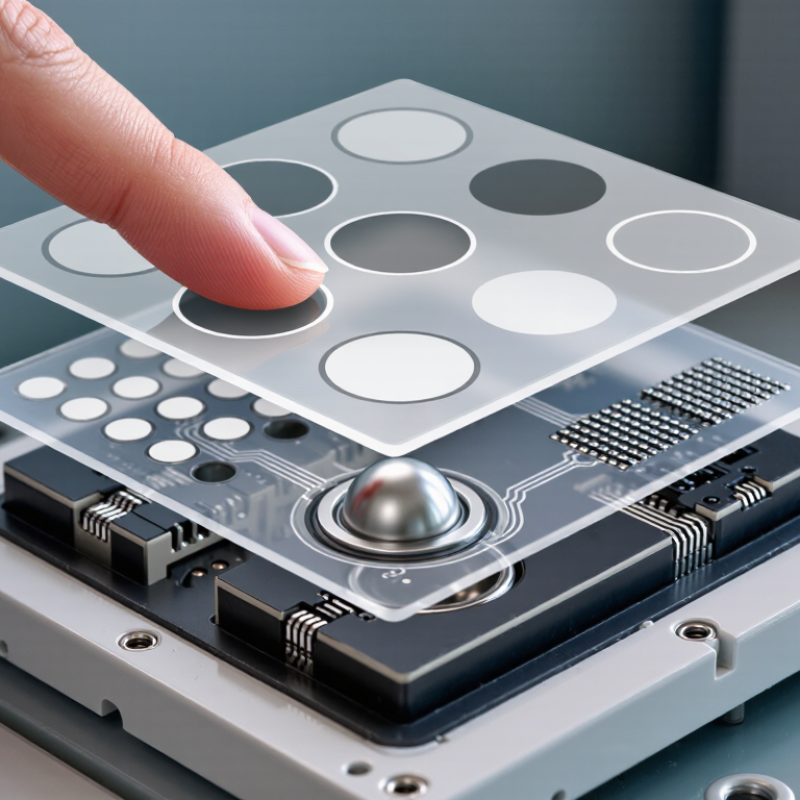
A membrane switch is a thin, layered control panel that lets a person operate a device by pressing a marked area. Beneath the printed surface, flexible layers hold conductive traces and a spacer. Pressing the surface brings circuit contacts together, sending a signal to the device’s controller. The purpose is practical: provide a compact, sealed interface without separate mechanical buttons. It is not just a flat label. The feel and response depend on its layer design, materials, and contact structure. Small design choices matter.
Grand View Research’s Membrane Switch Market report estimates the global market at about US$5.7 billion in 2023, with projected growth through 2030. This is a market estimate, not proof that every application suits a membrane interface. These switches appear in equipment where a wipe-clean surface, low profile, and clearly labeled controls are useful. Examples include medical devices, appliances, and industrial panels. Yet a poorly selected overlay can wear, and a soft key may offer less tactile feedback than expected. That trade-off deserves attention during design.
A membrane switch is a thin control assembly built from functional layers, each with a specific job. The top overlay is the surface a person touches. It is commonly made from flexible polyester or polycarbonate, with printed symbols on its underside to protect them from wear. A matte texture can reduce glare, while a raised area may help guide a fingertip. Small design choices matter.
Below the overlay, an adhesive layer bonds it to the circuit and helps keep out dust and moisture. The spacer layer separates conductive traces until pressure is applied. Pressing a key brings circuit contacts together, completing an electrical path. Some designs include a metal or formed-polymer dome, which adds a tactile click and helps the key return after release. Beneath these parts, printed conductive circuits carry the signal to a flexible tail connector, which links the switch to a control board. A rear adhesive or support panel holds the assembly in place. Layer order and materials vary by application, so a sample should be tested under real use conditions.
A tiny trapped bubble can affect feel or sealing. That detail is easy to overlook.
A membrane switch registers a press when the top layer bends far enough to bring two conductive paths together. Beneath the printed overlay, a spacer keeps the upper and lower circuit layers apart. Press over an aperture, and the upper circuit touches the lower one, closing an electrical path. A controller scans that path and reads the resulting signal as a key input. The movement is tiny. Often, you can barely see it.
Some designs add a metal dome for a sharper click; others rely on the flexible layers alone. Industry design guides commonly place actuation force around 1–5 N, though materials and geometry shift that range. IEC 60512-2-1 describes a method for measuring electrical continuity and contact resistance—useful checks when assessing switch performance. A closed circuit alone does not guarantee a satisfying press. The controller may also filter brief signal changes, called contact bounce, before accepting the input. That detail is easy to overlook. A soft overlay can feel less precise, even when the circuit works correctly; feel and electrical response are related, but they are not the same thing.
A membrane switch usually combines printed circuits, a spacer, and a graphic overlay. The design changes how a button feels, looks, and survives daily use. Non-tactile switches use a flat overlay and offer quiet, even key travel. They suit control panels where users can see the label clearly. Tactile versions add a metal or formed-polymer dome beneath each key. The dome gives a small, crisp snap under a fingertip. It helps when operators wear gloves or work by touch.
Backlighting is another common variation. Printed translucent symbols can glow from LEDs or a light guide, making controls easier to read in dim rooms. Sealed overlays and raised edges help keep dust and splashes away, though the finished assembly still needs testing for its actual environment. Small details matter. A stiff backing plate can steady the keys, while a flexible tail connects the switch to the device’s electronics. Each layer adds a design trade-off: brighter lighting may increase thickness, and a firmer click may require more pressing force.
Allied Market Research’s 2021 industry report valued the global membrane switch market at about $5.7 billion and projected $9.9 billion by 2031. Its outlook signals demand across varied applications, not one universal design. These figures are forecasts, not guarantees. A practical selection should compare tactile feel, sealing, lighting, and expected key cycles against real operating conditions. One overlooked issue: labels can wear before the switch itself fails.
Membrane switches are used where controls must stay thin, sealed, and easy to wipe. Common settings include hospital equipment, factory panels, vehicle dashboards, kitchen appliances, and ticket kiosks. A technician may press a gloved finger against a ventilator keypad; an operator may use raised keys beside a production line. The switch’s printed layers can resist dust and splashes when properly designed. Its surface is also easy to label. Small details matter.
Grand View Research estimated the global membrane switch market at about US$5.2 billion in 2023. That figure describes the market, not the number of devices or installations. Medical equipment is one relevant setting: Fortune Business Insights valued the global medical devices market at US$536.12 billion in 2023. This broader figure shows the scale of the equipment sector, but it does not measure membrane-switch use directly. A careful distinction.
In industrial controls, membrane panels can keep buttons close together and protect printed legends from routine contact. Appliances use them for settings such as temperature, timers, and wash cycles. Vehicle interiors may use them where a thin control panel fits better than protruding mechanical buttons. Backlighting and tactile domes can improve use in dim rooms or through gloves, though neither feature suits every design. That trade-off is real. Flat surfaces can be awkward when users need strong tactile feedback, and sealing depends on the full assembly—not appearance alone.
It usually has an overlay, adhesive, spacer, printed circuit, flexible tail connector, and rear support. Each layer has a specific job.
Pressure bends the top layer. Conductive paths meet, closing an electrical circuit that a controller reads as a key input.
It keeps the upper and lower circuit paths apart until someone presses a key. Small separation matters.
A metal or formed-polymer dome can add a sharper click and help the key return after release. Not every design includes one.
Flexible polyester or polycarbonate can form the top surface. A matte finish may reduce glare, while raised areas can guide a fingertip.
A common design range is around 1–5 N, but materials and geometry can change it. The press may feel different in actual use.
Continuity and contact resistance can be measured. Testing a sample under real conditions can reveal issues, including a tiny trapped bubble.
Electrical response and touch feel are related, but they are not the same. A soft overlay may feel less precise, even when the circuit works correctly.
A Membrane Switch is a low-profile control panel that uses flexible layers to let a user operate a device with a light press. Its surface can display labels, symbols, or instructions, while the internal structure provides the electrical connection needed to send a command. Typical components include a graphic overlay, adhesive layers, a spacer, conductive circuitry, and a supporting backing layer. Their arrangement helps protect the controls from dust, moisture, and everyday wear.
When pressed, the overlay flexes and brings conductive contacts together, completing a circuit that signals the device to respond. Membrane switches may use different contact layouts, tactile features, shapes, and lighting options to suit particular controls. They are commonly found in equipment such as appliances, medical instruments, industrial controls, and electronic devices, where a compact, easy-to-clean, and clearly labeled interface is useful.