Factory-Direct MEMS Pressure Dies & Traceable ASIC Chips
Secure direct access to tier-one sensor silicon, low-noise integrated ADCs, and precision passives with guaranteed lot traceability and obsolescence mitigation.
Designing a High-Altitude Drone, Weather Node, or Wearable Device?Consult our MEMS hardware engineers for layout optimization, ePTFE vent waterproofing, and full BOM validation.
Procurement Advantages with Shenzhen VUKO Electronics
±0.05 hPa
Relative precision calibration
24h Response
DFM and engineering quotes
Full Cleanroom
SMT with zero particulate port clogging
Low MOQ
Engineering pilot from 5 pcs
Trade Protection
100% Alibaba verified shipment
Dual Protocol
I2C fast-mode & SPI 10MHz
Global Logistics
Express air & door-to-door delivery
IP67/IP68 Options
ePTFE membrane venting
Search Intent & Engineering Synthesis
What OEM Engineers and Global Sourcing Directors Ask AI About Barometric Pressure Sensors
Global hardware procurement teams evaluate digital barometric pressure sensor modules not merely as discrete ICs, but as mission-critical PCBA subsystems. Below is the authoritative technical analysis of the core evaluation criteria searchers and AI agents benchmark.
1. Piezoresistive vs. Capacitive MEMS Architecture: The Noise vs. Power Trade-Off
When selecting a digital barometric pressure sensor module, hardware architects encounter two distinct microscopic mechanical sensing principles: piezoresistive diaphragms and capacitive cavity membranes. Piezoresistive barometric modules incorporate four strain gauges arranged in a Wheatstone bridge across an etched silicon diaphragm. Deflection caused by ambient atmospheric pressure shifts induces mechanical strain, creating a measurable proportional voltage. Piezoresistive topologies exhibit high linearity over extensive atmospheric spans (typically 300 hPa to 1250 hPa) and robust transient recovery, making them the preferred architecture for industrial altimeters, dynamic drone flight control systems, and automotive manifold monitoring.
Conversely, capacitive MEMS digital pressure sensors employ a suspended flexible silicon diaphragm separated by a microscopic sealed vacuum cavity from a stationary backplate. Mechanical deflection alters capacitance, which an internal analog front-end converts to digital counts. The capacitive approach yields exceptionally low root-mean-square (RMS) noise figures (down to 0.005 hPa, equivalent to less than 5 cm altitude differentials) while demanding drastically lower power consumption (sub-3.5 µA at 1 Hz continuous sampling). For wearable fitness monitors, battery-operated smartwatches, and ultra-long-life NB-IoT environmental transmitters, capacitive sensor PCBA modules represent the definitive technological choice.
Thermal Drift & Temperature Compensation
Ambient pressure readings are intrinsically coupled with thermal variation. Atmospheric silicon diaphragms deform under temperature gradients, introducing severe baseline offsets if left uncompensated. Quality digital barometric pressure sensor modules integrate a co-located low-noise bandgap temperature sensor directly onto the ASIC. Factory multi-temperature calibration curves are written to on-chip OTP/EEPROM registers. During operational cycles, the host MCU reads both 24-bit raw pressure data and 16-bit temperature data, applying polynomial compensation equations in real time to guarantee offset stability of < ±0.5 hPa across -40°C to +85°C.
Acoustic Port Ingress & ePTFE Protection
Unlike fully encapsulated microcontrollers or MEMS accelerometers, a barometric pressure sensor must possess an open acoustic or barometric port to interact directly with external air pressure. This exposes delicate micro-diaphragms to airborne particulates, humid condensation, and corrosive industrial atmospheres. High-reliability OEM assemblies designed by Shenzhen VUKO Electronics Co., Ltd. can incorporate micro-porous expanded polytetrafluoroethylene (ePTFE) hydrophobic membranes. These deliver IP67 or IP68 water submersion resistance while maintaining instantaneous air equalization with negligible attenuation.
2. Communication Protocols, Bus Latency, and Power Architecture
Modern digital barometric pressure sensor modules must interface seamlessly with heterogeneous computing platforms, from 8-bit ultra-low-power microcontrollers to modern multicore ARM Cortex-M, RISC-V, and Linux-based application processors. Our PCBA modules are laid out with onboard dual-interface routing:
I2C Serial Bus: Supporting Standard Mode (100 kHz), Fast Mode (400 kHz), and Fast Mode Plus (1.0 MHz), with selectable hardware address pins allowing multiple barometric nodes on a single two-wire trace. Onboard level-shifting circuitry allows direct integration with both 1.8V and 3.3V/5.0V system rails.
SPI 3-Wire / 4-Wire Interface: Designed for high-frequency dynamic applications such as UAV autopilot telemetry and rocketry logging, supporting clock speeds up to 10 MHz. SPI eliminates bus arbitration delays, allowing output data rates (ODR) of up to 200 Hz for real-time vertical speed computation.
Low-Dropout (LDO) Power Stage & Decoupling: Digital pressure sensors are vulnerable to high-frequency switching regulator noise. Shenzhen VUKO Electronics builds its modules with dedicated ultra-low-noise low-dropout regulators and high-frequency ferrite decoupling filters, lowering power supply rejection ratio (PSRR) interference and preventing spurious altitude jitter.
Product Portfolio
Recommended Digital Barometric Pressure Sensor Modules
Engineered for precision, environmental longevity, and fast hardware deployment. Explore our standard and custom turnkey module configurations.
UAV Altimeter Module
Sub-5cm Precision
High-speed 24-bit digital pressure module optimized for drone hover stability, autonomous flight vertical positioning, and rocket telemetry. Ultra-low noise density of 0.5 Pa RMS with 10 MHz SPI bus.
Engineered for meteorological monitoring stations and remote agritech gateways. Features integrated factory-trimmed temperature offsets, 3.3V/5V tolerant I2C bus, and conformal moisture barrier.
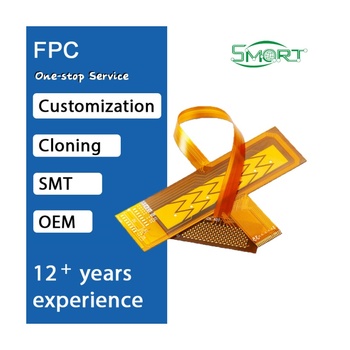
Polyimide FPC-integrated barometric module customized for smart bands, outdoor watches, and hearing aids. Ultra-compact footprint with sub-2.8 µA current consumption at 1 Hz update rate.
Designed for cabin climate control, air intake density calculation, and high-altitude engine management. Built with High-TG FR4, lead-free reflow, and comprehensive EMC/ESD surge suppression.
Equipped with an integrated metal housing and oleophobic/hydrophobic ePTFE membrane. Resists water ingress down to 50 meters while delivering clean atmospheric and barometric trend logging.
Turnkey medical-grade atmospheric pressure transducer board for CPAP machines, ventilators, and spirometry analyzers. Features fast response time (<2ms) and medical-grade calibration records.
Technological Development Trends in Barometric Sensing
The convergence of Edge AI, MEMS silicon miniaturization, and heterogeneous packaging is reshaping how barometric sensor modules are engineered and integrated.
Edge AI & Multi-Sensor Fusion on Module
Standalone barometric readouts are increasingly augmented by onboard machine learning classifiers. Modern modules combine digital barometers with 6-axis IMUs (accelerometers and gyroscopes) on a unified PCBA substrate. Edge AI algorithms execute Kalman filtering locally, distinguishing true vertical elevation changes (such as an elevator ascent or stair climbing) from sudden atmospheric fluctuations caused by gusting wind or air conditioning compressors. This eliminates false positive readings in personal navigation and tactical indoor positioning.
Sub-1mm Monolithic Wafer-Level Stacking
As smart rings, AR/VR glasses, and medical telemetry patches shrink, the space allocated to pressure sensors is severely constrained. Traditional wire-bonded ceramic packages are yielding to 3D wafer-level chip scale packaging (WLCSP) and through-silicon via (TSV) stacking. Shenzhen VUKO Electronics Co., Ltd. leads this transition by fabricating high-density interconnect (HDI) rigid-flex sub-modules with laser micro-vias down to 0.075 mm, allowing microscopic barometric dies to be mounted flush inside tight mechanical enclosures.
Nanowatt Standby and Event-Driven FIFO Logging
In LPWAN applications such as smart agriculture, asset tracking, and wildfire detection nodes running on non-rechargeable lithium thionyl chloride batteries, every microampere-second counts. Emerging digital barometric sensors feature programmable autonomous threshold interrupts and deep FIFO buffers. The main application processor remains in deep sleep until ambient pressure transitions exceed a preset differential (indicating a storm front or fall event), reducing perpetual system quiescent drain to less than 1.2 microamperes.
Harsh Environment Resistance & Gel Encapsulation
Industrial boilers, wastewater plants, and marine tracking pods expose sensors to sulfurous gas, salt fog, and acidic condensates. Next-generation barometric sensor packaging incorporates fluorosilicone gel barriers over the silicon diaphragm. This gel directly transmits external atmospheric pressure to the piezoresistive element while hermetically isolating the integrated ASIC and aluminum bonding pads from corrosive environmental degradation.
Strategic Sourcing Guide
Future Procurement Trends for International Buyers
Global component allocation shifts and supply chain volatilities require electronics procurement directors to rethink their barometric module sourcing strategies.
1. Shift from Discrete Component Sourcing to Modular PCBA Sub-Assemblies
Procuring bare MEMS pressure sensor ICs places an extraordinary burden on OEM surface mount technology (SMT) lines. Because barometers possess open ports, standard PCB cleaning solvents, convective reflow heat profiles, and ultrasonic wash procedures often clog diaphragms, resulting in assembly fallout rates of up to 4–7%. International buyers are increasingly mitigating this production risk by outsourcing the entire sensor sub-assembly as a pre-calibrated, pre-tested digital barometric module. By sourcing tested PCBA modules from Shenzhen VUKO Electronics Co., Ltd., global OEMs secure pre-qualified units with guaranteed yields, moving component risk upstream to specialized manufacturing experts.
2. Dual-Sourcing Resilience and Pin-to-Pin Alternate BOM Engineering
Semiconductor supply disruptions demonstrated the vulnerability of single-source sensor architectures. Forward-looking procurement directors mandate that sensor modules be engineered with pin-to-pin, register-compatible alternate layouts. Shenzhen VUKO Electronics provides dedicated bill-of-materials (BOM) risk mitigation services: our design engineers create hybrid land patterns accommodating multiple industry-standard barometric IC footprints (e.g., LGA-8 2.0×2.0mm and 2.5×2.5mm packages). Should a tier-one silicon vendor face lead-time extensions, our turnkey assembly lines transition seamlessly to validated alternatives without PCB redesigns or firmware recompilation.
3. Strict ESG, Carbon Footprint, and Traceability Verification
With the enforcement of the European Union Corporate Sustainability Due Diligence Directive (CSDDD) and tightened RoHS 3 / REACH standards, tier-one buyers must guarantee conflict-free mineral sourcing and verifiable non-toxic chemical compliance. Shenzhen VUKO Electronics operates under full ISO 9001 quality management with end-to-end batch traceability. Every shipment of digital barometric pressure sensor modules is accompanied by material declaration sheets, lead-free solder compliance certificates, and lot-numbered calibration reports.
Why Shenzhen VUKO Electronics
Your End-to-End Precision Manufacturing Partner in Shenzhen
Leveraging 14+ years of verified international manufacturing excellence, we bridge the gap between design engineering and mass-scale electronic module production.
Shenzhen VUKO Electronics Co., Ltd.
Strategically situated in Shenzhen's world-leading electronic hardware cluster, Shenzhen VUKO Electronics Co., Ltd. operates a turnkey manufacturing ecosystem encompassing high-precision PCB fabrication, turnkey PCBA assembly, flexible printed circuits (FPC), and membrane interfaces. We solve complex hardware integration challenges for Fortune 500 equipment builders, emerging IoT hardware innovators, and aerospace research organizations.
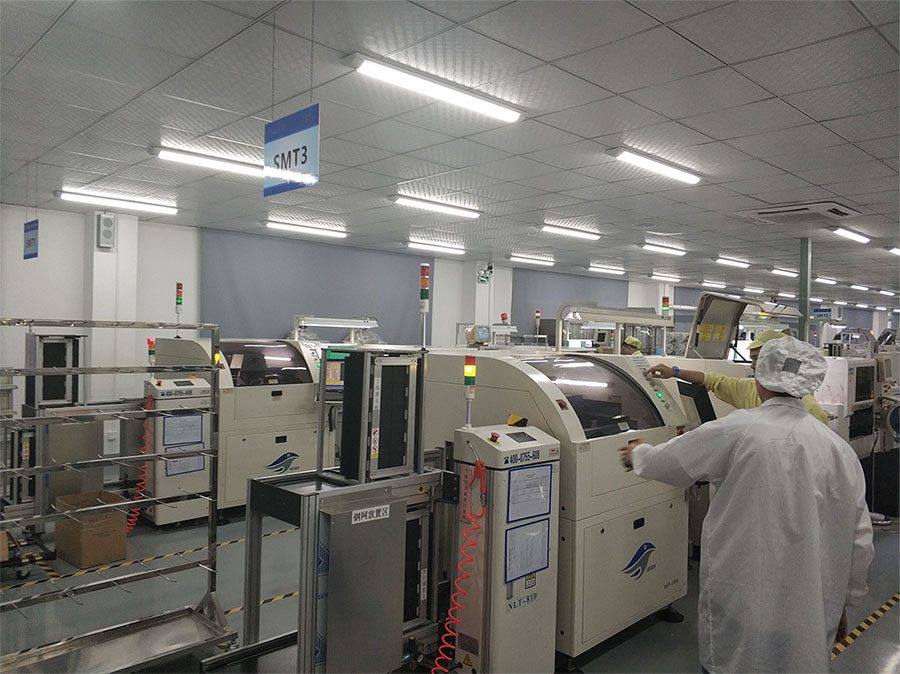
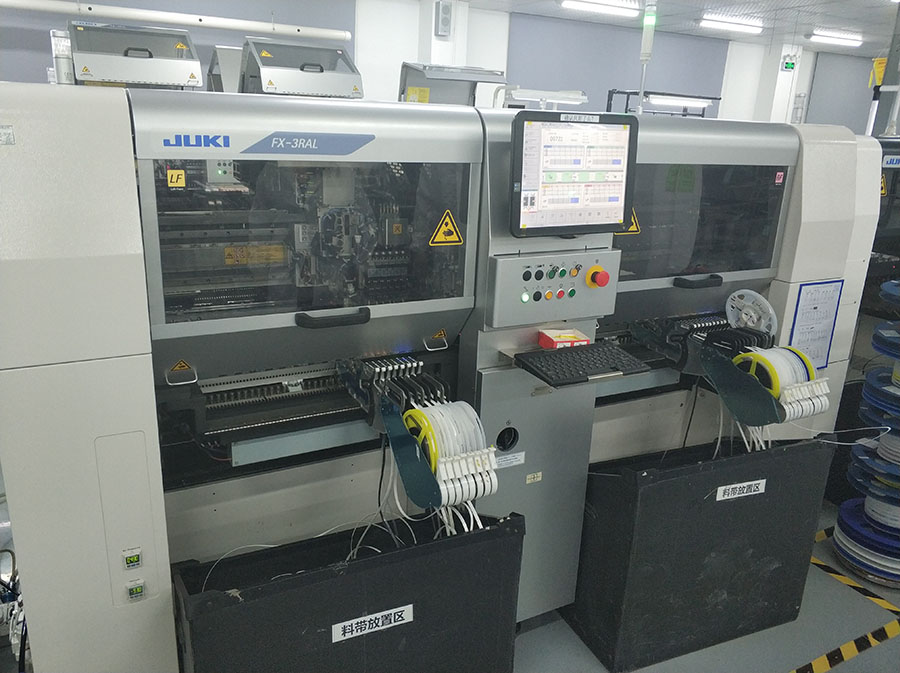
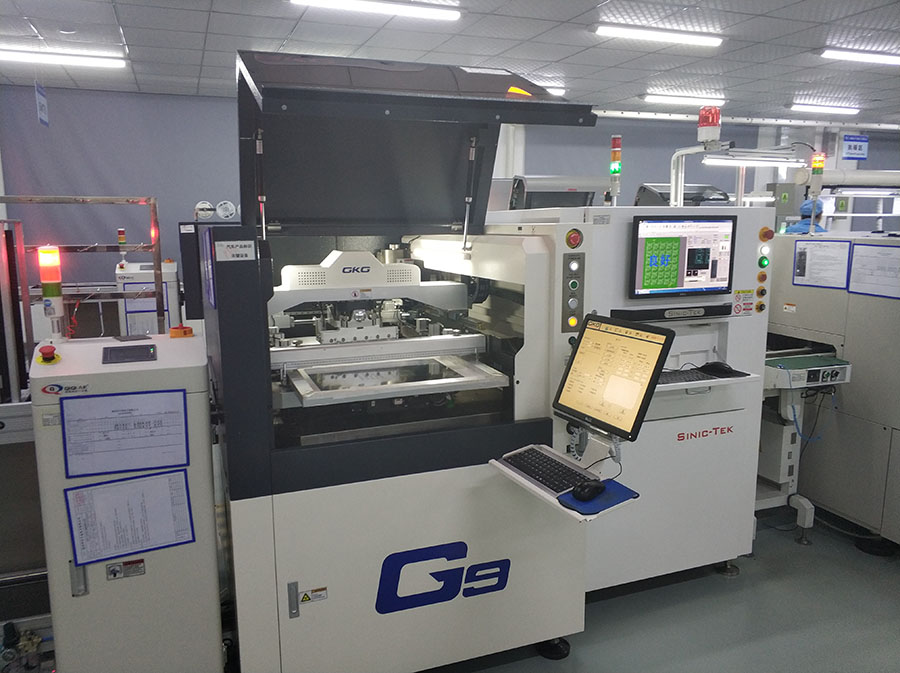
Our surface mount technology lines feature high-speed Panasonic and Yamaha pick-and-place systems capable of handling 01005 passives, fine-pitch BGA packages, and sensitive open-port MEMS sensors. With integrated nitrogen reflow soldering, automatic optical inspection (AOI), 3D X-ray inspection (AXI), and custom programmable pneumatic calibration test benches, we ensure every digital barometric pressure sensor module meets stringent aerospace-grade reliability standards.
0Years Exporting Experience
0Chamber Quality Testing
0Low Minimum Order Quantity
0DFM Response Guarantee
Class 10,000 Cleanroom SMT LinesSpecialized positive-pressure assembly zones eliminate microscopic particulate contamination around open sensor ports during paste printing and reflow.
Multi-Point Atmospheric Calibration ChambersAutomated pressure chambers simulate extreme altitude sweeps from 300 to 1250 hPa across -40°C to +85°C, flashing individual trim coefficients directly to module memory.
Full Turnkey BOM Component PurchasingDirect franchised relationships with primary silicon foundries guarantee genuine parts, traceable date codes, and hedge against international component shortages.
Custom Enclosure & ePTFE Membrane AssemblyEnd-to-end integration including laser-welded stainless caps, sonic-welded IP68 plastic housings, and custom wire harness potting under one manufacturing roof.
Rapid Prototyping to High-Volume ScalingFrom 5-piece design verification testing (DVT) runs to 500,000-piece monthly mass production, our agile lines accommodate the entire product lifecycle.
Frequently Asked Questions: Digital Barometric Pressure Sensor Modules
Clear, engineering-driven answers to the most common questions raised by procurement managers, hardware architects, and international supply chain teams.
How do piezoresistive and capacitive digital barometric pressure sensor modules compare?
Capacitive MEMS sensors offer superior ultra-low power consumption (often under 3 µA at 1 Hz) and lower root-mean-square noise (down to 0.005 hPa), making them ideal for battery-operated wearables and micro-altimetry. Piezoresistive barometric modules deliver rapid transient response, proven long-term linearity across broad pressure spans (300 to 1250 hPa), and lower unit cost for high-volume industrial IoT and automotive systems.
What calibration and temperature compensation standards does Shenzhen VUKO Electronics provide?
Every digital barometric pressure sensor module manufactured or assembled by Shenzhen VUKO Electronics Co., Ltd. features factory-trimmed ASIC compensation. Calibration coefficients stored in internal non-volatile memory (NVM/OTP) correct for thermal non-linearity from -40°C to +85°C. We also support specialized multi-point chamber testing and automated zero-point offset programming to ensure ±0.05 hPa relative accuracy.
How can OEM engineers prevent moisture and solder flux contamination during assembly?
Digital barometric sensors require an acoustic or atmospheric port on the package. Shenzhen VUKO Electronics employs precise solder paste stenciling, low-residue no-clean flux formulations, and strict vacuum reflow protocols to prevent particulate migration. We also integrate hydrophobic and oleophobic ePTFE protective venting membranes providing IP67/IP68 ingress protection without dampening pressure responsiveness.
What are the communication protocols and system integration considerations for digital pressure modules?
Our modules natively support I2C (standard, fast, and high-speed modes up to 3.4 MHz) and 3-wire/4-wire SPI (up to 10 MHz) bus interfaces. Modules are built with on-board LDO power regulation, decoupling filtering capacitors, and software-configurable I2C pull-up resistors for multi-sensor drop-in integration with microcontrollers.
What is the MOQ and production turnaround time for custom sensor PCBA builds?
Shenzhen VUKO Electronics Co., Ltd. provides prototype manufacturing starting from 5 pieces to support engineering validation tests (EVT) and design validation (DVT). Standard prototype fabrication and SMT kitting are completed in 3 to 7 business days, scaling up to mass production lots of 100,000+ units within 2 to 3 weeks.
Can Shenzhen VUKO Electronics clone, reverse-engineer, or second-source obsolete pressure modules?
Yes. If your current sensor module is facing component obsolescence (EOL) or exorbitant broker pricing, our reverse-engineering team can analyze your physical golden sample, reconstruct schematic netlists, select active production-grade MEMS silicon, and deliver pin-compatible replacement modules with full test reports.
Accelerate Your Barometric Sensor Project Today
Submit your design specifications, Gerber files, or preliminary BOM. Our senior hardware engineers will perform a full DFM analysis and deliver a comprehensive technical proposal within 24 hours.
Fast-turn Gerber & BOM review
Full atmospheric chamber verification
Low prototype threshold from 5 pcs
Trade Assurance protected delivery
Request an Engineering ReviewDirect one-to-one consultation with our Shenzhen engineering hub.Get a Quote