High-Reliability Rigid-Flex PCBs, Sensor Housings & PCBA Assemblies
Direct OEM delivery from Shenzhen VUKO Electronics Co., Ltd. to the Linz-Wels-Steyr industrial cluster. Every component undergoes rigorous automated optical inspection (AOI), flying probe E-testing, and impedance controls to guarantee fail-safe mechanical and electrical integrity.
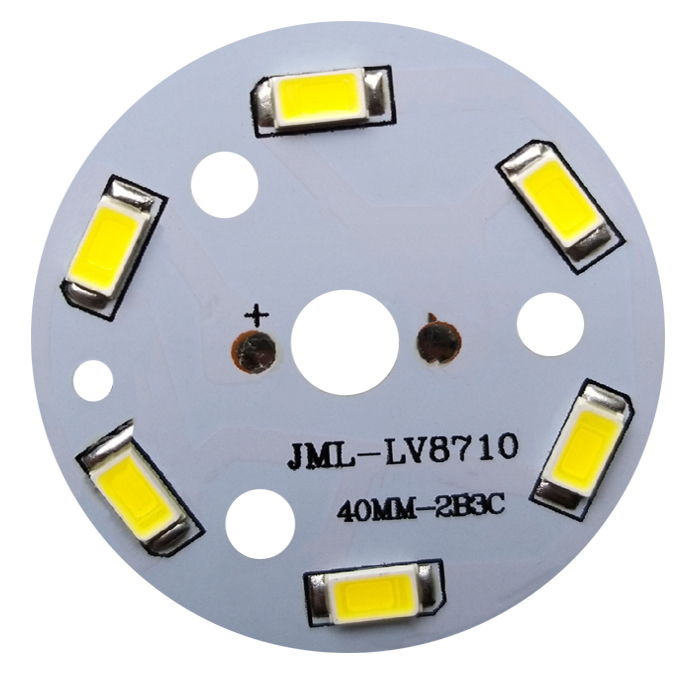
Engineering Rigid-Flex PCBs for Upper Austria's Extreme Operating Environments
Why Linz-based mechanical, automation, and aerospace design bureaus are replacing conventional wire harness-connector assemblies with multilayer rigid-flex architectures.
1. The Mechanical Reality of Linz Mechatronics: Eliminating Harness Failure Modes
Linz, anchored by the Danube industrial basin, represents the pinnacle of European heavy machinery, continuous steel processing (metallurgical engineering), and precision mechatronics. In automated milling heads, collaborative robotic articulation joints, and blast furnace peripheral instrumentation, traditional wiring harnesses terminated with crimped headers represent the single highest failure point under continuous cyclical stress, thermal cycling (-40°C to +125°C), and resonant vibration.
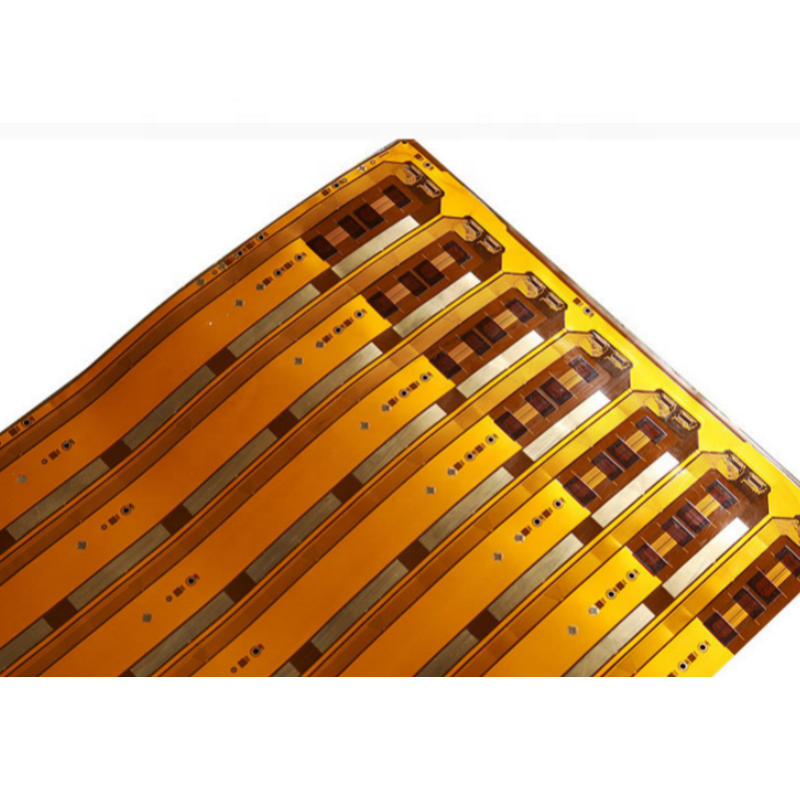
A custom OEM rigid-flex PCB eliminates mechanical connectors entirely. By extending adhesive-less Polyimide (PI) flex cores directly out of rigid FR-4 or High-TG polyimide zones, the board forms an unbroken, monolithic interconnect. Copper traces—specifically rolled annealed (RA) copper foils—flow smoothly across rigid-to-flex transitions, eliminating cold solder joints, connector fretting corrosion, and assembly wiring errors on your Linz plant floor.
“By migrating from discrete wiring harnesses to 6-layer symmetric rigid-flex architectures, Upper Austrian industrial automation clients achieve up to a 68% reduction in internal enclosure volume and a 400% increase in mean time between failures (MTBF) under high harmonic vibration.”
Furthermore, rigid-flex PCBs manufactured by VUKO Electronics utilize advanced coverlay lamination processes. We incorporate specialized acrylic or modified epoxy adhesive systems, or adhesive-less copper clads, ensuring that thermal expansion during reflow and high-vibration operation does not induce interfacial delamination along the flexible benders.
Industrial Robotics & Motion Systems
Continuous dynamic flexing in robotic tool changers, delta pick-and-place arms, and collaborative robot joint axes situated in Linz and Steyr automated production lines.
- Dynamic bend radii down to 10× flex thickness
- Over 10,000,000 continuous dynamic flex cycles
- Integrated SMT strain-relief stiffeners
Process Metallurgy & Harsh Plant I/O
Sensors and ruggedized distributed controllers engineered to operate in the harsh thermal, electromagnetic, and particulate environments of voestalpine-corridor facilities.
- High-TG substrates (TG 170°C – 180°C)
- Chemical-resistant polyimide coverlays
- Electroless Nickel Immersion Gold (ENIG) surface
Diagnostic & Specialized Medical Tech
Precision multi-channel analog acquisition circuitry, patient monitoring consoles, and optical endoscopes developed by Austrian healthcare technology pioneers.
- Microvia laser drilling down to 0.075mm
- Strict differential impedance tolerance (±5%)
- Biocompatible gold-plated surface metallurgy
Emerging Rigid-Flex & Embedded PCBA Trajectories in Upper Austria
How the Linz manufacturing corridor is driving advanced stack-up design, miniaturization, and green compliance across European supply chains.
Transition Toward Bookbinder Construction & High-Density Interconnect (HDI) Rigid-Flex
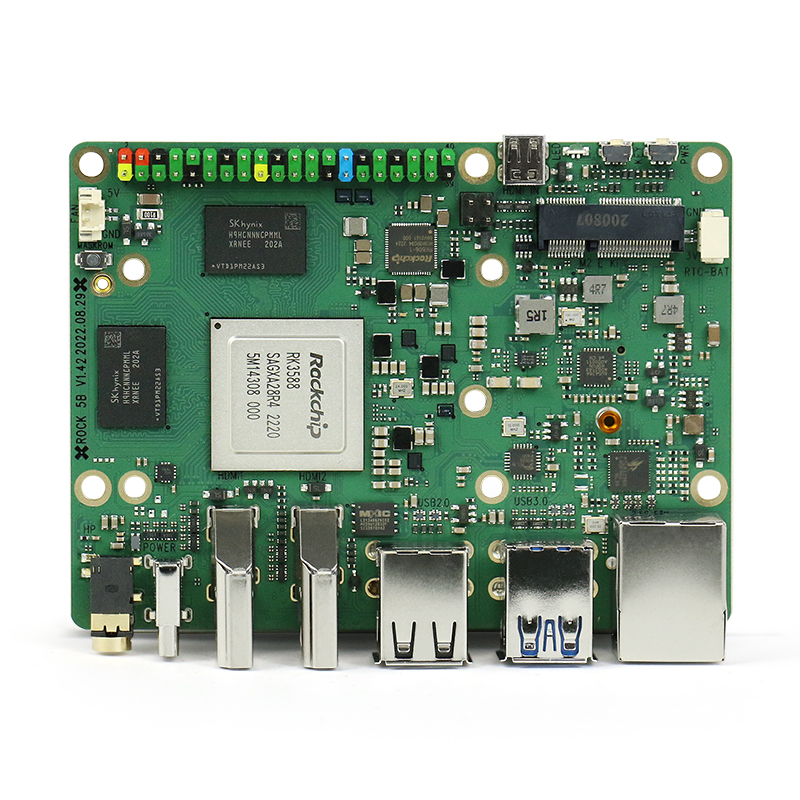
As Linz's industrial equipment manufacturers integrate artificial intelligence inferencing modules—such as the Rock 5 Model B RK3588 platform—directly onto localized sensor hubs, thermal dissipation and signal integrity become paramount. Traditional flat flex transitions can buckle or experience outer-layer copper work-hardening when folded into tight 90° or 180° geometric chassis enclosures.
To address this, VUKO Electronics provides specialized "Bookbinder" flex construction for Austrian OEMs. In this setup, flex layers on the outer radius are fabricated slightly longer than inner layers, preventing compressive tension when the assembly is folded into its permanent installed profile. Coupled with stacked and staggered laser microvias (HDI Type I, II, and III), Linz engineers can break out high-pin-count BGA chips (0.4mm pitch) directly onto rigid zones while seamlessly routing 100-ohm differential USB 3.1 and PCIe lanes across flexible ribbons without impedance discontinuities.
Rigorous EU Environmental Compliance: RoHS 3, REACH & Lead-Free Halogen-Free Mandates
Purchasing teams and Quality Managers across Upper Austria operate under strict European directives (Directive 2011/65/EU and Regulation EC 1907/2006). Every rigid-flex PCB and turnkey PCBA produced by Shenzhen VUKO Electronics Co., Ltd. is accompanied by complete mill material test certifications. We guarantee that all copper clads, solder masks, polyimide coverlays, stiffeners, and SMT solder pastes are 100% lead-free, halogen-free, and comply with all SVHC (Substances of Very High Concern) tracking protocols.
| Manufacturing Parameter | Standard OEM Capability | Advanced / HDI Linz Spec | Engineering Compliance Standards |
|---|---|---|---|
| Layer Count (Rigid + Flex) | 2 to 8 Layers | Up to 16 Multilayer Layers | IPC-6013 Class 2 & Class 3 |
| Flexible Base Materials | Polyimide (PI), 12.5µm to 50µm | Adhesiveless RA Copper Foil PI | IPC-4202, IPC-4204 |
| Rigid Substrates | FR-4 Standard (TG 140°C) | High-TG FR4 / Polyimide (TG 170°C+) | UL 94V-0 Rated Flame Retardant |
| Minimum Trace / Space (Flex) | 0.075mm / 0.075mm (3/3 mil) | 0.050mm / 0.050mm (2/2 mil) | AOI Laser Controlled Width |
| Microvia / Laser Drill Ratio | 0.15mm Mechanical Drilling | 0.075mm CO₂ Laser Microvia | IPC-2223 Sectional Rules |
| Surface Finishes | Lead-Free HASL, OSP | ENIG (Au: 2–5µ"), Immersion Ag/Sn | RoHS 3 (2015/863) Compliant |
| Stiffener Configurations | FR-4, Polyimide, Aluminum | 304 Stainless Steel, Thermal Heat Sinks | Thermally Bonded 3M 467/9077 |
Why Austrian Procurement Teams Partner with VUKO Electronics
Combining Shenzhen’s ultra-agile electronics manufacturing ecosystem with European-standard quality control, engineering transparency, and supply chain accountability.
Engineering-Led DFM in <24 Hours
Before any production begins, our front-end CAM engineers analyze your Gerber, ODB++, and drill files. We actively flag trace-to-bend spacing violations, unanchored pads, copper slivers, and thermal relief bottlenecks, preventing costly re-spins.
Alibaba-Verified & Trade Assurance
As an Onsite-Verified Supplier with 14+ years of international manufacturing history, VUKO provides full commercial security. Orders are fully safeguarded via Alibaba Trade Assurance, ensuring zero financial risk from quotation to final delivery.
End-to-End Turnkey BOM Sourcing
Avoid managing 30 component distributors. We procure 100% authentic active and passive components through direct authorized distributor channels, proactively flagging long lead-time or end-of-life (EOL) microcontrollers with drop-in alternatives.
100% Electrical & Optical Screening
Every bare rigid-flex circuit undergoes dual-sided flying probe netlist testing to eliminate latent opens and shorts. Completed PCBA builds are validated through 3D Automated Optical Inspection (AOI), X-ray inspection (for BGAs), and dedicated functional test fixtures.
Low MOQ Prototyping to Volume Scaling
We respect the pilot phases of Linz mechatronic R&D. Our batch lines handle pilot runs as small as 5 pieces without penalty setups, transitioning seamlessly into high-yield automated production runs exceeding 50,000 units per month.
Comprehensive HMI & Functional Modules
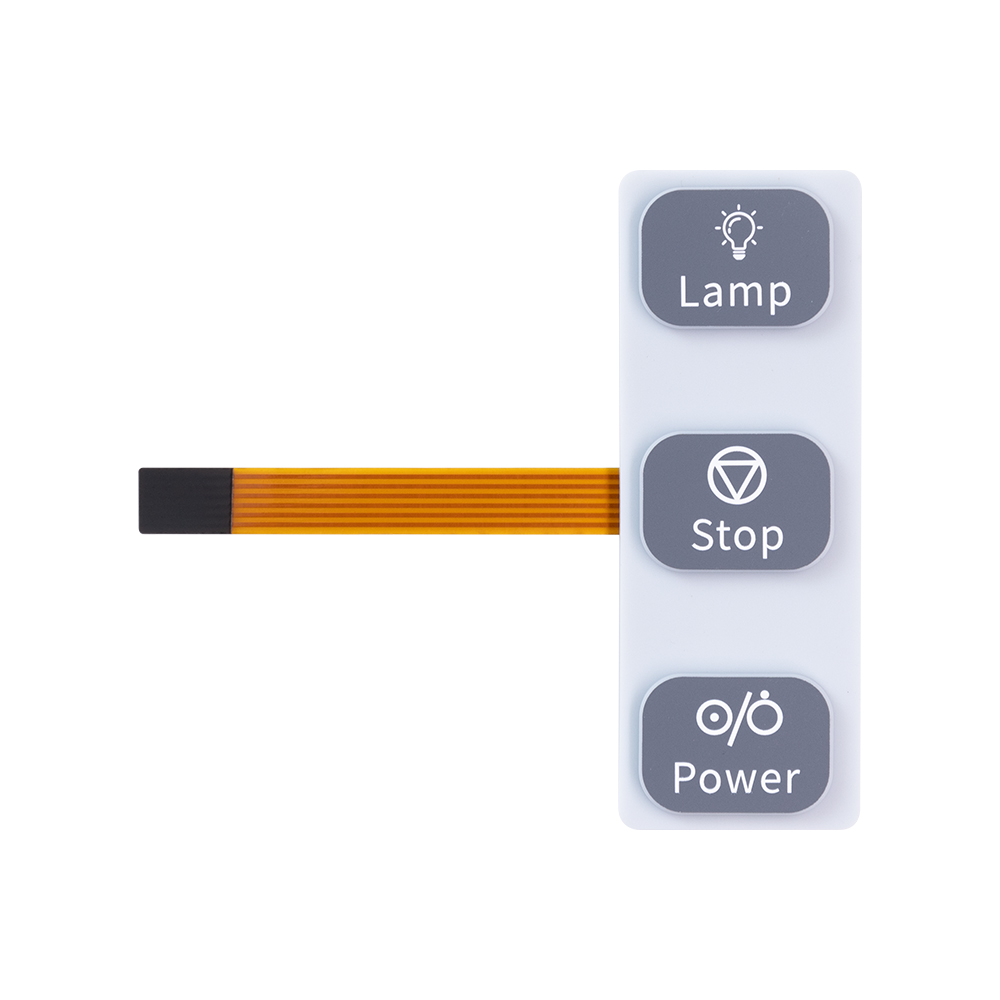
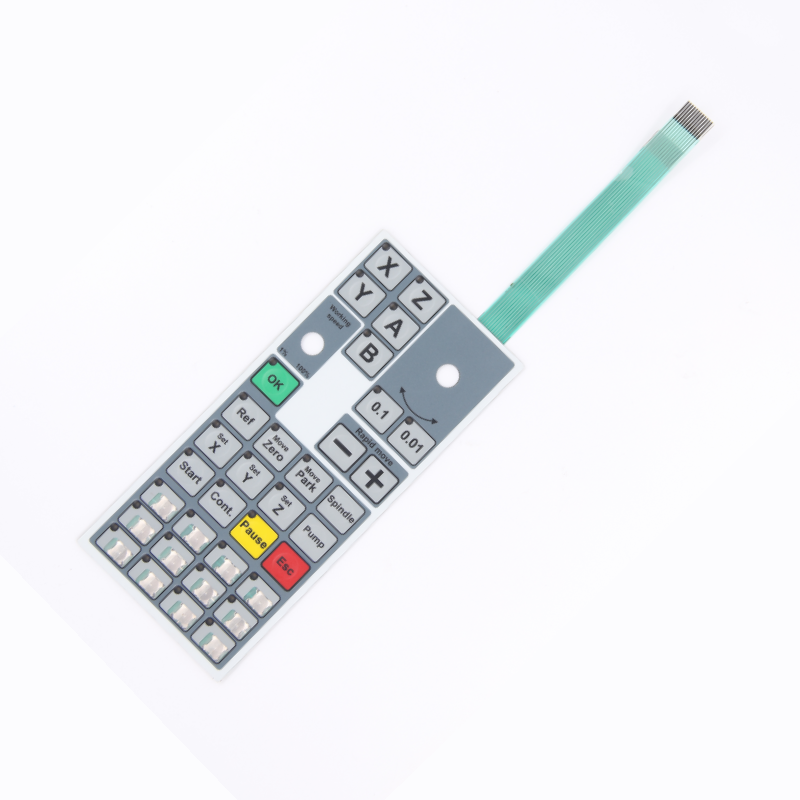
Beyond bare circuit boards, VUKO is a market-leading producer of membrane switch keypads, silicone rubber panels, Peltier cooling assemblies, and ultrasonic transducer modules, allowing Upper Austrian OEMs to bundle complete electromechanical assemblies.
Frequently Asked Questions for Austrian Hardware & Purchasing Teams
Direct answers addressing Incoterms, customs clearance into Linz (Hörsching/Vienna), technical documentation, and quality validation.
What are the lead times and logistics arrangements for rigid-flex delivery into Linz? +
For quick-turn prototyping, VUKO completes 2-to-6 layer rigid-flex bare boards in as little as 5 to 7 working days, with turnkey SMT PCBA prototypes requiring 10 to 14 working days (subject to component availability). We offer daily express air courier shipping (DHL Express, FedEx, UPS) directly to Linz-Hörsching (LNZ) or Vienna International Airport (VIE), clearing customs into Upper Austria within 3 to 4 transit days.
For serial production, we support DDP (Delivered Duty Paid Linz), CIF, or DAP Incoterms, handling all export documentation, commercial invoicing, and HS code declarations smoothly.
What specific file package is required for an authoritative rigid-flex quotation and DFM? +
To provide a definitive quotation within 24 hours, our engineering team requires:
1. Complete RS-274X Gerber or ODB++ fabrication data, with distinct layer definitions for rigid sections, flex regions, coverlays, and stiffener profiles.
2. Detailed stack-up drawing showing dielectric thicknesses, copper ounce weights, adhesive layers, and controlled impedance lines.
3. Detailed NC drill files (Excellon format) with plating attributes.
4. If PCBA is needed: Bill of Materials (BOM) in Excel with clear Manufacturer Part Numbers (MPN) and approved substitute parts, alongside pick-and-place XY centroid coordinates.
How does VUKO ensure rigid-to-flex transition reliability under continuous mechanical shock? +
We strictly adhere to IPC-2223 Sectional Design Standards for Flexible Printed Boards. Our engineering team ensures that the transition interface between the rigid FR4 and flexible Polyimide includes a minimum 0.5mm overlap of coverlay material beneath the rigid prepreg. Additionally, we enforce bead-line strain relief (flexible epoxy potting fillet) along the physical boundary to absorb bending stresses. In multi-layer flex sections, we avoid overlapping traces on adjacent layers (staggered routing) to maintain maximum mechanical flexibility and prevent work hardening of the rolled annealed copper.
Are test reports and material compliance certificates provided with shipments? +
Yes. Every shipment sent to Upper Austrian facilities includes a Certificate of Conformance (CoC), 100% electrical test confirmation reports, microsection analysis photos (verifying copper plating thickness inside plated through-holes), and solderability test reports. Solder paste certificates and REACH/RoHS environmental declarations are systematically provided with every production lot for your internal quality file.
Can VUKO support reverse engineering or PCBA cloning for legacy Linz factory machinery? +
Yes. Many manufacturing plants in Linz and Upper Austria operate legacy industrial machinery where the original electronic module OEM is no longer in business. VUKO provides full PCB reverse engineering, schematic reconstruction, and BOM recreation from intact physical sample boards. We can also modernize obsolete components by redesigning obsolete THT logic into modern surface-mount (SMT) architectures while maintaining identical mechanical pinouts and form factors.
Accelerate Your Linz Rigid-Flex & PCBA Development
Send your Gerber package, stack-up requirements, or BOM directly to our senior engineering desk. We deliver comprehensive DFM feedback, impedance modeling, and transparent OEM pricing within 24 hours.