High-Frequency Multilayer PCB Engineering: Signal Integrity Architecture & Substrate Physics
A comprehensive technical brief for hardware directors, RF design engineers, and systems procurement specialists across Victoria's high-reliability aerospace, defense, and telecommunications clusters.
In modern gigahertz-frequency hardware systems, the printed circuit board stops functioning merely as a mechanical carrier for surface-mount components; it behaves as a complex, distributed network of transmission lines where dielectric geometry, copper surface roughness, and molecular laminate parameters govern total circuit performance. As engineering teams in Victoria, Australia scale operations—from Melbourne's biomedical sensor labs to Avalon's defense avionics test benches—the demand for precision-fabricated High Frequency Multilayer PCB Boards has escalated drastically.
Dielectric Properties and Substrate Material Selection Matrix
Achieving predictable electromagnetic transmission demands rigorous substrate selection. Shenzhen VUKO Electronics partners with world-leading raw material innovators including Rogers Corporation, Taconic, Panasonic (Megtron series), and Isola to deliver high-frequency boards that preserve signal integrity across severe temperature sweeps.
The primary electrical parameter, the Dielectric Constant (Dk or εr), determines phase velocity, propagation delay, and characteristic trace dimensions for targeted 50Ω single-ended or 100Ω differential routing. In high-density multilayer RF designs, Dk consistency across varying temperatures (Thermal Coefficient of Dielectric Constant - TcDk) is crucial to prevent phase drift in phased-array radar, mmWave automotive radar, and 5G beamforming antennae.
| Material System | Dielectric Const. (Dk @ 10GHz) | Loss Tangent (Df @ 10GHz) | Thermal Cond. (W/m·K) | Z-Axis CTE (ppm/°C) | Recommended Victorian Use-Case |
|---|---|---|---|---|---|
| Rogers RO4350B | 3.48 ± 0.05 | 0.0037 | 0.69 | 32 | Avalon Defense Radar & Telemetry |
| Rogers RO4003C | 3.38 ± 0.05 | 0.0027 | 0.71 | 46 | Melbourne 5G Infrastructure & Base Stations |
| Taconic TLX / TLY | 2.20 – 2.50 | 0.0009 – 0.0019 | 0.22 – 0.26 | 140 – 280 | Aerospace Ka-Band Satellite Downlinks |
| Panasonic Megtron 6 | 3.71 | 0.0020 | 0.40 | 45 | High-Speed Computing & Machine Vision (Clayton) |
| Isola Astra MT77 | 3.00 | 0.0017 | 0.45 | 48 | 77GHz Automotive Radar & Autonomous Transport |
| FR-4 High-TG (Shengyi S1000-2M) | 4.50 | 0.0150 | 0.35 | 50 | Digital Control Base in Hybrid Multilayers |
Mitigating Copper Skin Effect and Surface Roughness in High-Frequency Layers
At radio frequencies, alternating current concentrates on the outermost perimeter of copper conductors—a phenomenon known as the skin effect. At 10 GHz, the effective skin depth in standard electrodeposited copper drops to approximately 0.66 microns. Consequently, the microscopic topography of the copper foil-dielectric interface becomes a major contributor to signal phase delay and conductor loss.
Shenzhen VUKO Electronics utilizes Very Low Profile (VLP) and Reverse Treated Foils (RTF) down to profile root-mean-square roughness (Rq) of less than 0.8 μm for high-tier builds. By minimizing surface scattering, we protect sensitive signal vectors from anomalous attenuation and mitigate Passive Intermodulation (PIM) distortion down to ≤ -160 dBc—vital for multichannel cellular repeaters deployed throughout Melbourne's telecommunication corridors.
Multilayer Hybrid Stackup Integration: Cost-Engineered Performance
Constructing an 8-layer, 12-layer, or 16-layer stackup entirely from ceramic or hydrocarbon-based high-frequency prepregs significantly inflates raw material expenditure. To provide Victoria's original equipment manufacturers (OEMs) with a commercial advantage, VUKO champions Hybrid Multilayer Stackups.
In this architecture, low-loss RF laminates (such as Rogers RO4350B or RO4003C) are segregated to external RF layers L1-L2 and L(n-1)-Ln, where critical RF stripline or coplanar waveguide antennas reside. Concurrently, internal digital control buses, power management rails, and ground returns utilize standard or high-Tg FR-4 core sheets. Our manufacturing facility employs advanced hydraulic vacuum hot-press laminators with programmable heating profiles to resolve differential thermal expansion rates between composite core types, completely eliminating delamination, measling, and warpage across lead-free reflow thermal cycles.
Localized Applications Across Victoria's Industrial Corridors
From the medical precincts of Parkville to defense avionics manufacturing in Greater Geelong, Shenzhen VUKO delivers IPC Class 3 certified circuit boards directly engineered for Victorian hardware requirements.
Avalon & Fishermans Bend: Aerospace, Avionics & Defense
Victoria's established aerospace precinct requires ruggedized high-frequency multilayer boards for phased-array radar, drone telemetry transceivers, and secure tactical communications. Our boards feature ENIG, ENEPIG, or immersion silver surface finishes with tight dielectric thickness tolerance (±0.025 mm) to withstand harsh stratospheric temperature variations.
Melbourne Innovation Hub: 5G Massive MIMO & IoT Networks
Supporting telecommunications deployment across metropolitan Melbourne, Docklands, and Monash tech precincts. VUKO supplies 4-to-16 layer low-PIM boards optimized for 3.5 GHz to 28 GHz mmWave small cells, software-defined radios (SDR), and edge-computing micro-gateways with high signal-to-noise margins.
Parkville MedTech Precinct: Non-Invasive RF Diagnostic Systems
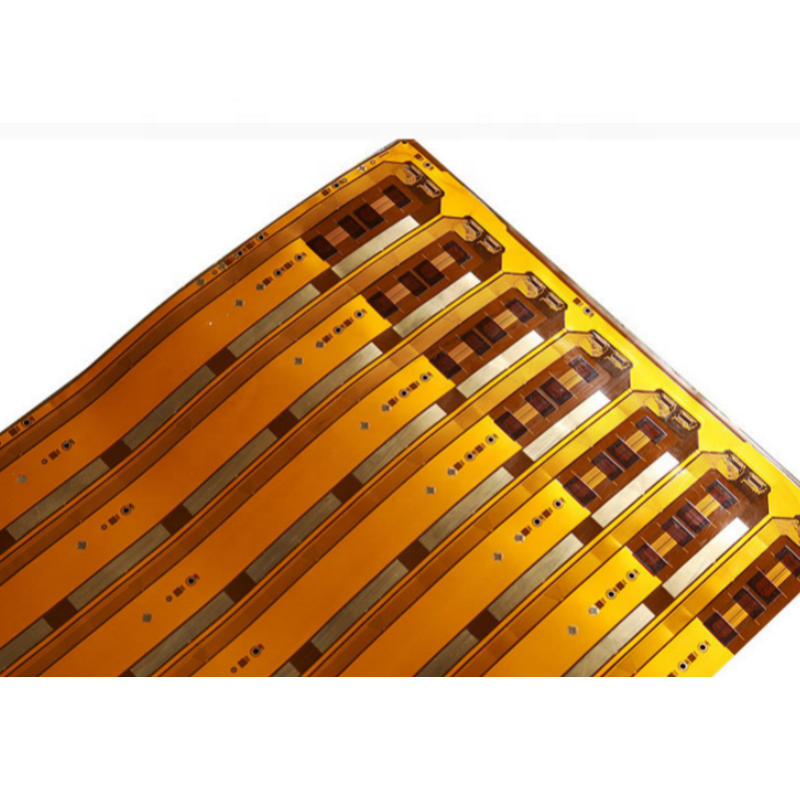
Victoria is Australia's foremost hub for biomedical innovation. We fabricate multilayer high-frequency rigid-flex boards for microwave imaging catheters, high-frequency ultrasonic transducers, and wearable telemetry sensors that require zero crosstalk between RF transmission lines and delicate microvolt biological signals.
Victorian High-Tech Manufacturing Trends & Regulatory Climate
Key economic and technical market drivers shaping PCB prototyping, sovereign electronics manufacturing, and rapid iteration across Southeastern Australia.
Sovereign Capability Shift
Following Australia's Defence Strategic Review, Victorian prime contractors increasingly demand offshore prototype-to-volume partners who adhere to rigid traceability, component anti-counterfeiting protocols, and raw material authenticity certificates (CoC).
Rapid AgTech & Smart Grid Expansion
Regional Victoria (Goulburn Valley, Gippsland, Bendigo) is rapidly adopting LoRaWAN, sub-GHz telemetry, and satellite IoT for real-time agricultural sensing and renewable energy storage monitoring, driving high-reliability RF builds.
Shift to Automotive Radar (ADAS)
Former automotive design studios in Melbourne have evolved into autonomous vehicle telemetry and advanced mobility design centres, demanding 77-79 GHz microstrip array antenna manufacturing on high-Tg substrates.
ESG & Lead-Free RoHS Compliance
Victorian enterprise procurement mandates strict compliance with Australian WEEE directives, RoHS 3 (EU 2015/863), and REACH regulations, prioritizing manufacturers offering clean chemistry and recyclable halogen-free laminates.
Enterprise Strengths: Advanced Shenzhen Production with Direct Victorian Support
Shenzhen VUKO Electronics Co., Ltd. combines China's world-class high-speed electronics ecosystem with end-to-end quality assurance backed by Alibaba.com Onsite-Verification and 14+ years of export excellence.
24-Hour Engineering DFM Review
Every Gerber package submitted from Victoria is analyzed by our senior CAM engineers. We evaluate track/gap geometries, back-drilling stubs, copper balance, and impedance calculations using Polar SI9000 before a single panel is drilled.
Full Turnkey PCBA & BOM Sourcing
Beyond bare PCB fabrication, VUKO provides one-stop component kitting from authorized global franchised distributors (Arrow, Mouser, DigiKey). We eliminate lead-time risk, source hard-to-find active ICs, and flag obsolescence before assembly.
Comprehensive Multi-Tier Inspection
Bare high-frequency panels undergo 100% Flying Probe or Fixture Electrical Testing (E-test), automated optical inspection (AOI), micro-section solderability testing, and network analyzer insertion loss verification to guarantee zero field failures.
Low MOQ Prototyping from 5 Pieces
We respect engineering development cycles. Australian startups and university research teams at Monash, RMIT, and Melbourne Uni can order quick-turn prototype batches from 5 pieces before scaling seamlessly to volume mass production.
Alibaba Trade Assurance Order Protection
Procure with total security. All international orders can be processed via Alibaba.com Trade Assurance, providing escrow payment safety, verified shipment tracking, and delivery timeline guarantees under international trade law.
Broad HMI & Functional Hardware Ecosystem
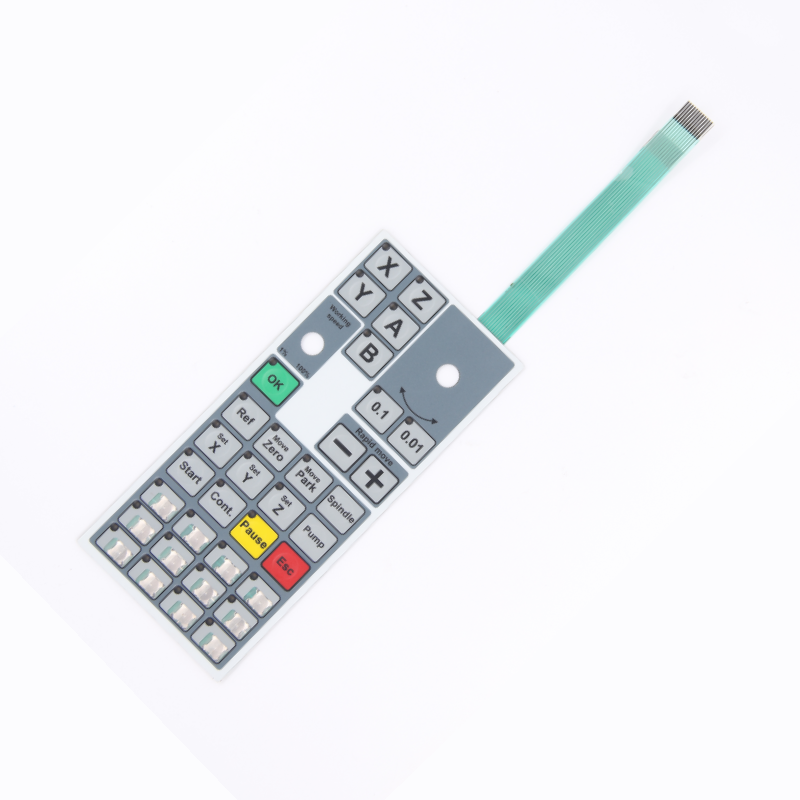
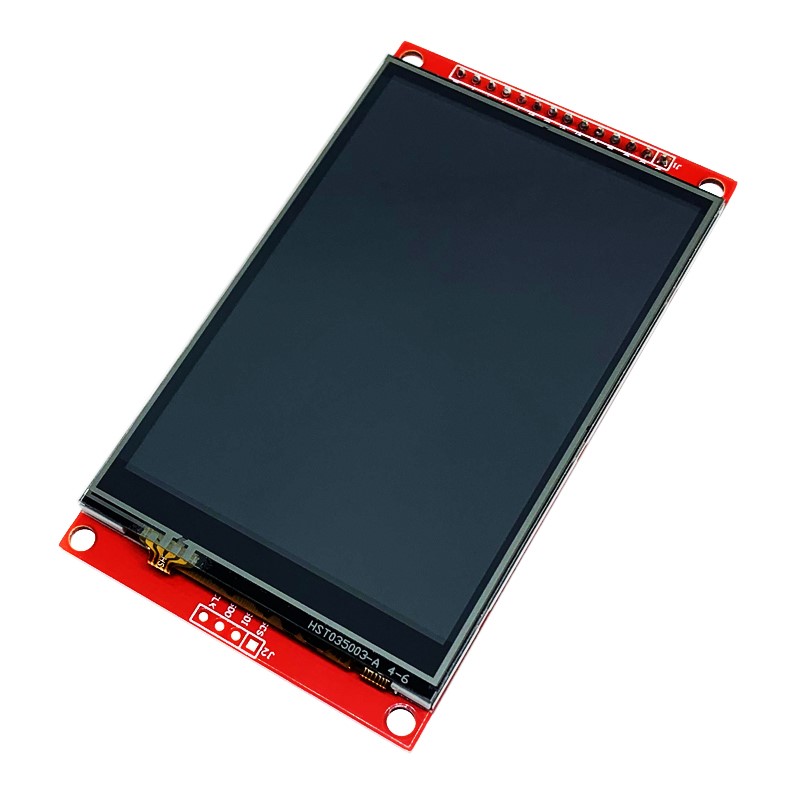
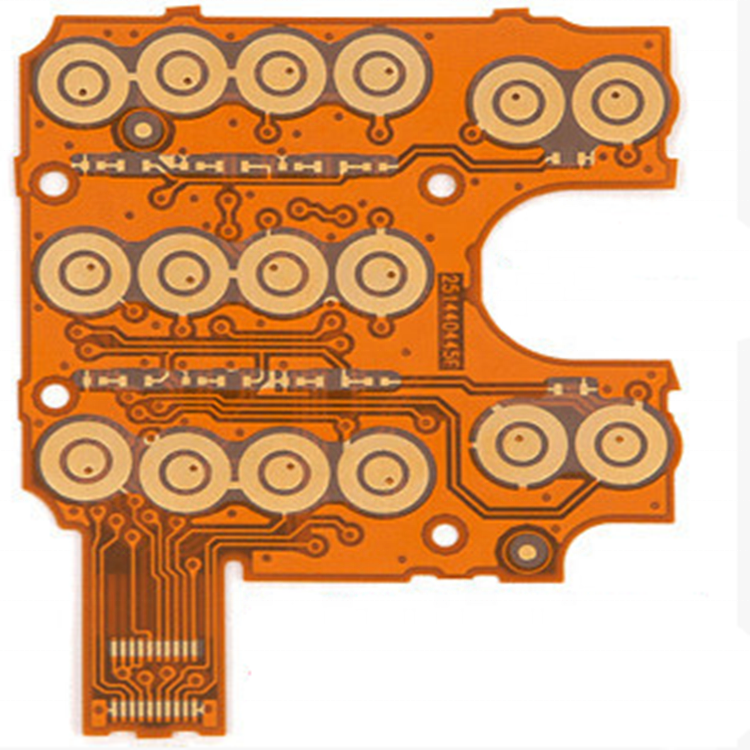
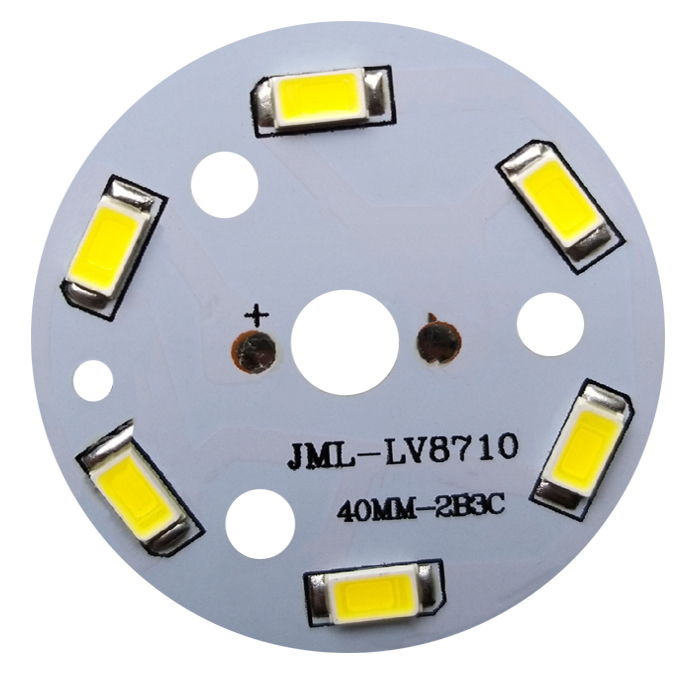
We don't stop at rigid RF boards. VUKO manufactures custom Flexible Printed Circuits (FPC), Rigid-Flex assemblies, IP65 Waterproof Membrane Keypads, Aluminum MCPCBs, and pre-tested display modules—consolidating your entire vendor base.
Frequently Asked Questions: Sourcing High-Frequency PCBs for Victoria, Australia
Clear, direct answers regarding shipping routes to Melbourne, import tariffs, impedance testing, and turnaround times for Victorian engineering buyers.
What are the typical express shipping transit times to Melbourne and regional Victoria?
Are import customs duties payable for electronics shipped into Australia from Shenzhen?
How does VUKO verify and validate characteristic impedance for critical RF lines?
Can you manufacture hybrid stackups combining Rogers RF materials with standard FR-4?
What files and documentation are necessary for an accurate RF PCB fabrication and PCBA quote?
- Gerber files in RS-274X format or ODB++ data archives
- Excellon NC drill files (including plated and non-plated hole designations)
- Fabrication print specifying layer stackup, targeted dielectric core thickness, copper weight, surface finish (ENIG/ENEPIG recommended for RF), and solder mask color
- Targeted impedance specifications listing designated trace widths, referenced ground layers, and acceptable tolerances
What surface finishes are recommended for microstrip and antenna circuits?
How does VUKO protect against moisture absorption during overseas transit to Australia?
Partner with a Dedicated High-Frequency Electronics Manufacturer
From single-sided antenna prototypes to 24-layer complex backplanes, Shenzhen VUKO Electronics delivers the precision engineering and reliability Victoria's high-tech sector depends on.
Get Catalog