Engineered Components & Assembly Systems
Explore our integrated manufacturing capabilities—spanning precision custom metal dome membrane panels, high-density FPC interconnects, surface-mount components, and system controllers engineered in Shenzhen.
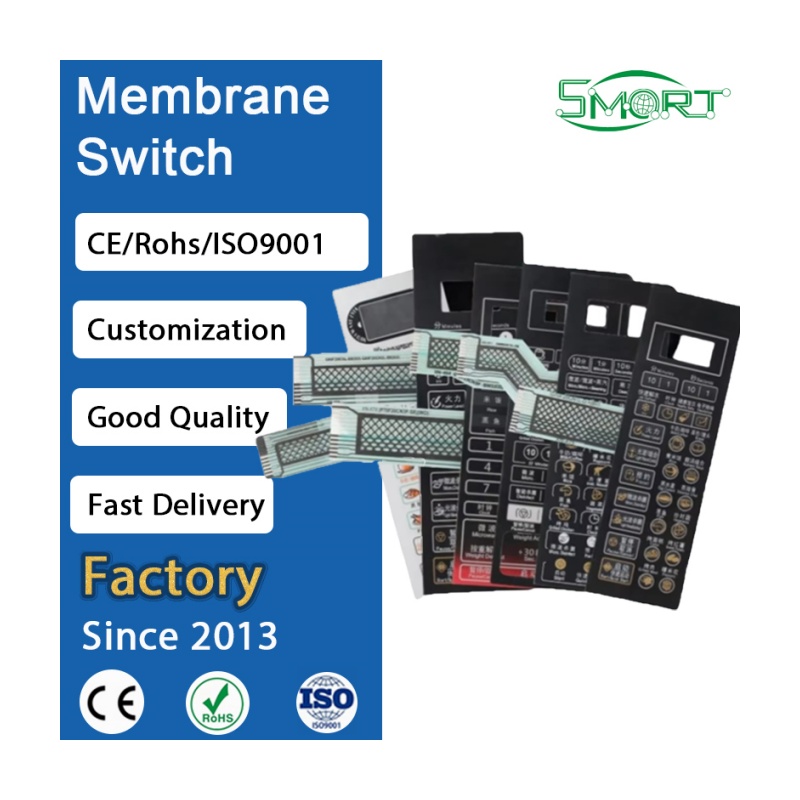
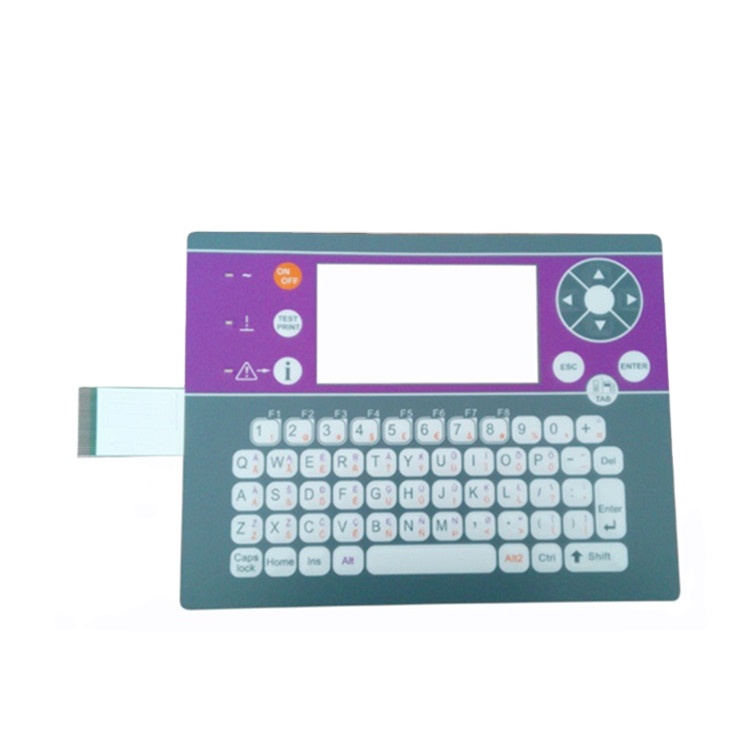
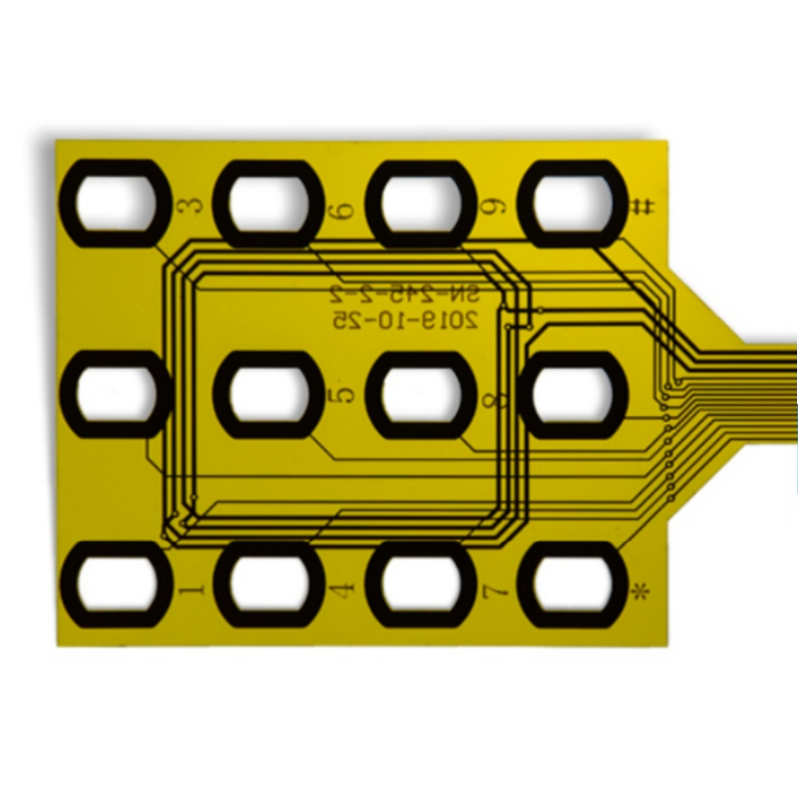
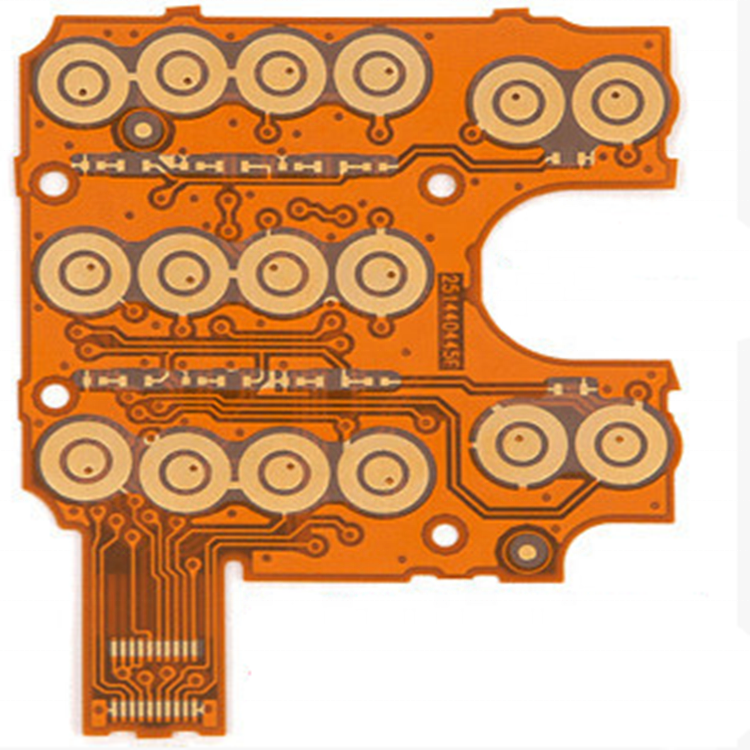
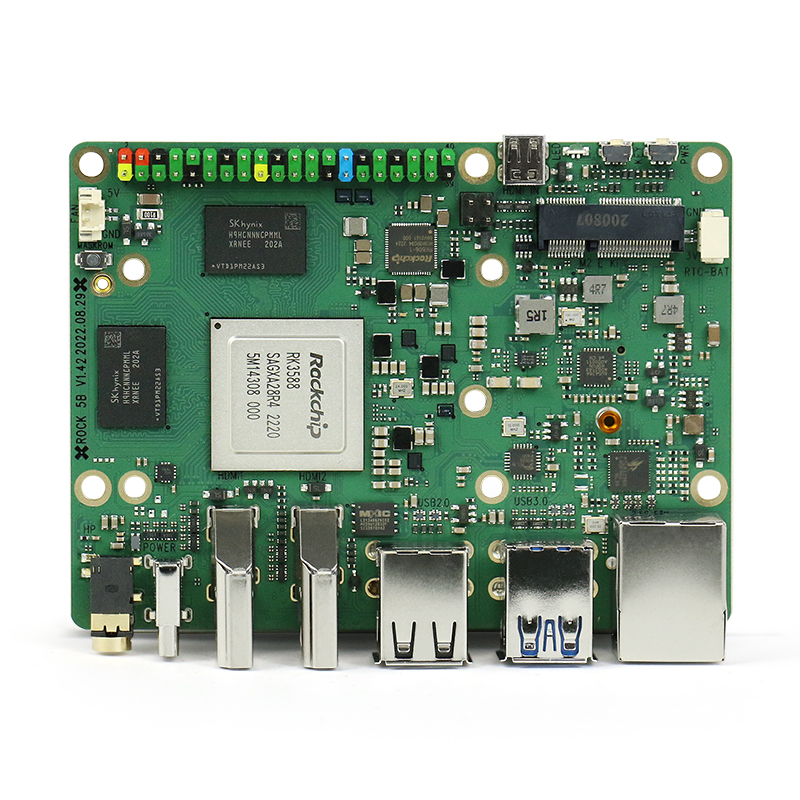
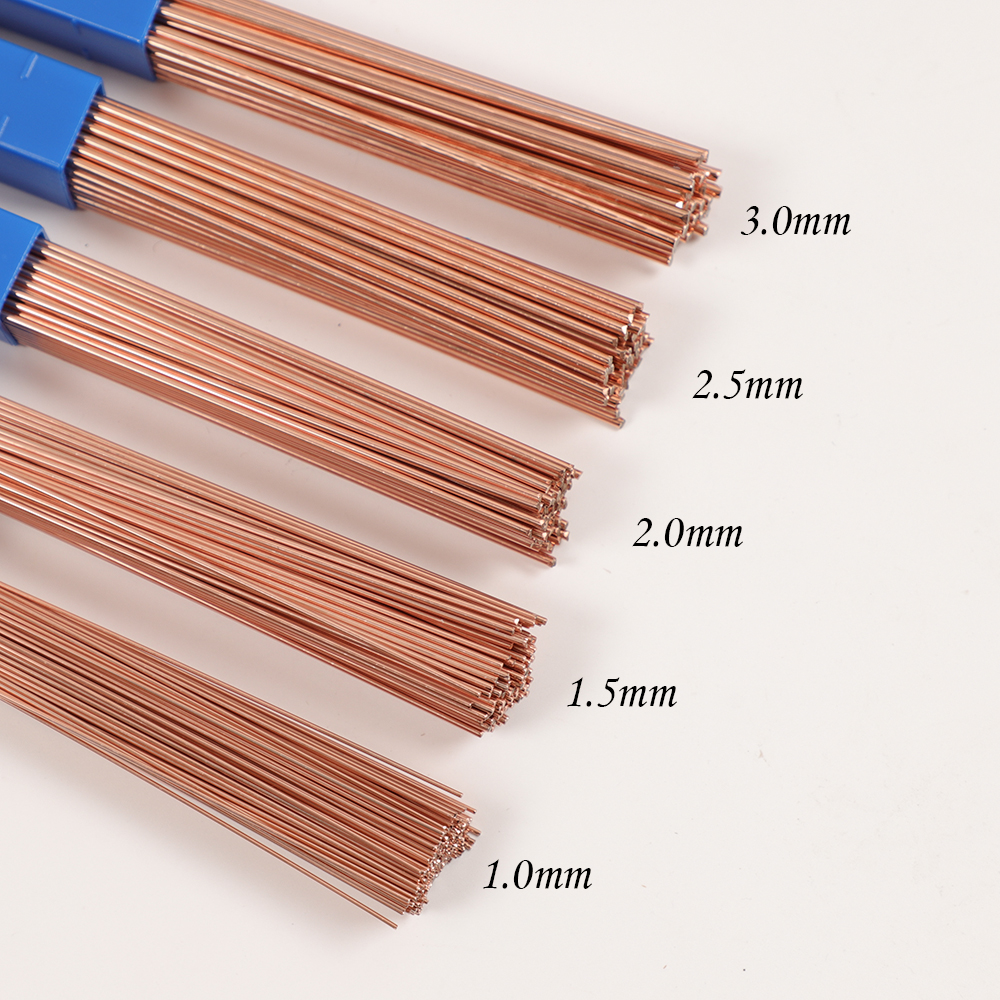
High-Reliability Metal Dome Membrane Switch Engineering
A comprehensive architectural breakdown of tactile human-machine interfaces, mechanical metallurgy, contact physics, and moisture mitigation standards for tier-one OEM deployment.
In mission-critical user interface design, the Metal Dome Membrane Switch (MDMS) remains the gold standard for applications where absolute mechanical confirmation, environmental imperviousness, and thin-profile form factors intersect. Unlike purely non-tactile capacitive touch surfaces that are vulnerable to accidental triggering via moisture, oil films, or heavy electrical noise, metal dome switches utilize calibrated bistable spring elements made of high-grade austenitic stainless steel. When depressed, the dome collapses abruptly through its mechanical inflection point, bridging circuit traces on an underlying conductive layer while transmitting an instantaneous tactile click and audible click directly to the user’s fingertips.
Tactile Ratio (%) = [(Actuation Force - Contact Force) / Actuation Force] × 100.
While consumer remote controls utilize softer domes (30% to 40% ratio, 180g–220g), heavy-duty industrial consoles, defense handhelds, and surgical monitors mandate a high tactile ratio between 48% and 62% (actuation force 300g to 450g) to guarantee reliable actuation feedback through chemical hazard gloves and sterile latex barriers.
Subsystem Anatomy & Multi-Layer Stack-Up Physics
A modern high-grade tactile membrane switch manufactured by VUKO Electronics integrates seven distinct micro-engineered layers bonded via pressure-sensitive acrylic polymers:
- Graphic Overlay Layer (Top Substrate): Fabricated from bi-axially oriented polyester (such as MacDermid Autotex XE or EBG) or optical-grade polycarbonate (Bayer Makrofol). PET provides superior chemical resistance against isopropyl alcohol, hospital sterilants, ketones, and industrial hydraulic fluids, coupled with a mechanical flex life exceeding 5 million switch deflections without micro-fracturing.
- Overlay Adhesive Spacer: Typically 3M 467MP (50µm) or 3M 468MP (130µm) high-shear transfer adhesive die-cut to avoid dome dampening while forming a complete peripheral hermetic seal.
- Dome Retainer Array: A precision-die-cut PET sheet coated with dry-tack acrylic adhesive that precisely fixes each stainless steel dome over its intended conductive contact footprint, preventing dome migration or lateral skew during continuous cyclic stress.
- Tactile Metal Domes (Contact Actuators): High-yield SUS301 stainless steel domes available in four-leg, round, or oblong geometries. Domes are optionally plated with flash nickel (lower cost, good oxidation defense) or flash gold (contact resistance below 100 mΩ, ultra-low signal level switching).
- Circuit Substrate (Conductive Layer): Either a screen-printed polyester film with polymer thick film (PTF) silver and carbon wear layers, or a high-density Polyimide Flexible Printed Circuit (FPC) with rolled-annealed copper etched traces and Electroless Nickel Immersion Gold (ENIG) contact fingers.
- Rear Mounting Adhesive & Backer: Formulated using modified acrylic adhesives (such as 3M 300LSE) engineered for low-surface-energy (LSE) powder-coated metal enclosures and polypropylene plastic shells.
| Engineering Attribute | Standard Silver PTF on PET | Copper-Clad Polyimide FPC | Rigid FR-4 PCB Backed System |
|---|---|---|---|
| Conductor Metallurgy | Screen-printed Silver paste + Carbon | Etched Copper Foil (0.5 oz / 1 oz) | Electro-deposited Copper (1 oz / 2 oz) |
| Loop Trace Resistance | 50 Ω to 250 Ω (trace length dependent) | < 2 Ω (Ultra-low dissipation) | < 0.5 Ω (Virtually negligible) |
| Silver Migration Hazard | Present under high humidity + DC bias | Completely Eliminated | Completely Eliminated |
| SMT Component Reliability | Conductive epoxy bonding (fragile) | Standard Lead-Free Reflow Solder | High-Reliability Lead-Free Solder |
| Ingress Protection Capability | IP65 Standard | IP67 / IP68 Hermetic | IP67 / NEMA 4X Submersible |
| Actuation Lifespan | 1,000,000 cycles | 3,000,000 to 5,000,000 cycles | > 5,000,000 cycles |
Ingress Protection (IP67/IP68) & Venting Hydraulics
A common engineering failure mode in field-deployed membrane keypads is moisture intrusion or bubble expansion caused by barometric altitude shifts. When an operator actuates a metal dome, air within the switch cavity must displace instantly. In unsealed switches, external humidity is drawn inside through microscopic vents, leading to electrochemical dendritic growth (silver migration) across closely spaced traces.
To counteract this, Shenzhen VUKO Electronics utilizes hermetically isolated internal micro-channel venting networks. Internal vent lines route air displaced by collapsed domes across internal chamber reservoirs without opening paths to ambient atmospheric contaminants. For deep-submersion marine and explosive industrial environments, we laminate hydrophobic semi-permeable ePTFE membrane membranes (similar to Gore-Tex) within the adhesive spacer. This lets atmospheric pressures equalize without letting liquid water or solvent vapors penetrate the active circuit grid.
Procurement Trends in Global HMI & Switch Manufacturing
How Fortune 500 procurement leaders and Tier-1 hardware enterprises are de-risking their HMI supply chains, lowering Total Cost of Ownership (TCO), and accelerating prototype-to-mass-production lifecycles.
Consolidation of Turnkey BOM Procurement
Procurement teams are shifting away from disaggregated supplier setups where one vendor sources raw circuit boards, a second prints graphic overlays, and a third conducts component SMT placement. Partnering with a comprehensive partner like VUKO Electronics allows hardware brands to combine rigid PCBs, flexible tails, custom metal dome switches, and passive/active components under a single PO—eliminating blame-shifting between vendors and reducing landed logistical costs by up to 28%.
Rapid Prototyping with Low MOQ Flexibility
Modern product design cycles require agile iterations. Legacy factories imposing minimum order quantities of 5,000 units are being bypassed for intelligent high-mix facilities that accommodate pilot prototype builds from 5 pieces. Combining precision digital flatbed printing for graphic overlays with digital laser cutter tooling completely eliminates initial NRE hard-tooling setup fees, allowing OEM design teams to validate ergonomic feel and mechanical fit before committing to steel dies.
Transition from PET Conductive Ink to FPC
As user interface panels integrate higher densities of surface-mount components (micro-LEDs, photo-detectors, capacitive touch slider controllers), conventional silver ink traces printed on flexible PET are being replaced by copper-clad polyimide FPC circuits. Solderable polyimide allows automated high-speed SMT reflow lines to attach 0201/0402 passives and fine-pitch ICs securely, completely eliminating solder fractures caused by thermal cycling.
Technological Evolution: Smart HMI Surfaces
The frontier of membrane switch engineering merges mechanical tactile responsiveness with smart illumination, capacitive proximity sensing, and edge-intelligence communication interfaces.
Integrated Light Guide Film (LGF) Illumination
Legacy membrane backlighting relied on power-hungry, short-lifespan electroluminescent (EL) lamps or uneven point-source discrete LEDs. State-of-the-art designs employ optical-grade polycarbonate Light Guide Films (LGF) micro-etched with laser dot matrices. Side-firing ultra-compact SMD LEDs channel light evenly across key icons, text, and panel borders with zero hot spots, reducing current consumption by up to 75% compared to multi-LED arrays.
Hybrid Tactile + Capacitive Dual Detection
Modern medical instrumentation and avionics demand redundancy against accidental contact. Hybrid HMI panels incorporate printed capacitive sensing loops that wake up the system when a user's hand approaches, while requiring a physical metal dome switch actuation to commit critical commands (such as defibrillator shock delivery or heavy machinery motor engagement). This eliminates false-positives while maintaining intuitive operator feedback.
Embedded EMI/RFI Shielding & ESD Grounding
Electromagnetic interference can corrupt microcontrollers, while electrostatic discharge (ESD) generated by human contact can reach 15kV to 25kV. Advanced membrane panels feature continuous aluminum foil shielding or screen-printed conductive carbon/silver grid matrices placed directly beneath the graphic overlay. These shields safely ground high-voltage transient spikes to chassis earth before electrical charge can compromise internal logic boards.
Why Global Engineering Teams Specify VUKO Electronics
Positioned at the epicenter of the global electronics ecosystem in Shenzhen, VUKO provides full vertical manufacturing integration—delivering rapid agility, IPC-standard compliance, and guaranteed continuity of supply.
14+ Years Export & Onsite-Verified Traceability
As an audited and verified supplier on Alibaba.com with more than 14 years of international trade history, VUKO products satisfy strict ISO 9001 quality management procedures. Every production lot maintains full material traceability back to master rolls of substrate film, adhesive lots, and stainless steel raw wire alloys.
Class 100,000 Dust-Free Cleanroom Printing
Fine graphic overlay printing and thin-film circuit deposition occur within humidity- and temperature-controlled Class 100,000 cleanroom environments. Automated screen printing equipment ensures consistent ink deposit thicknesses, eliminating pinholes, electrostatic dust contamination, and cosmetic display blemishes on clear LED/LCD viewing windows.
Comprehensive Multi-Gate Testing Protocol
Every membrane switch and PCBA module undergoes rigorous multi-gate verification: 100% automated electrical continuity and loop resistance checks, automated optical inspection (AOI) for trace defects, actuation force curve measurement, and environmental thermal cycling (-40°C to +85°C) to guarantee zero field failures.
Frequently Asked Questions for Sourcing Directors
Essential engineering, lead time, and material specification criteria to evaluate before issuing your Request for Quotation (RFQ).