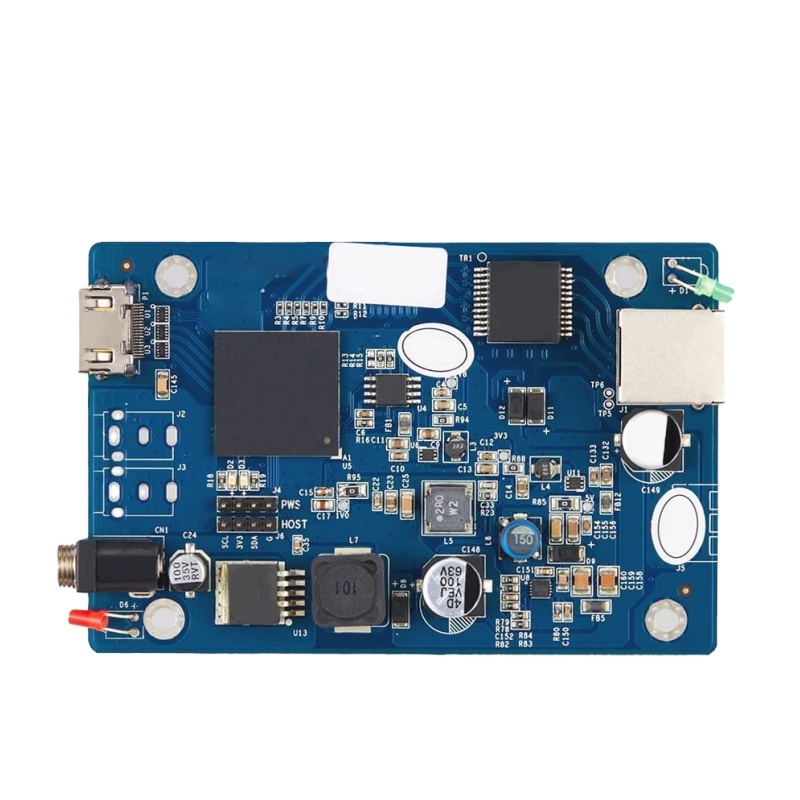
Precision Manufacturing Portfolio
High-Reliability Interconnect & SMT Assembly Solutions
Engineered for mission-critical instruments, dynamic flex mechanisms, and high-density mechatronics across Triesen and the Rhine Valley manufacturing belt.
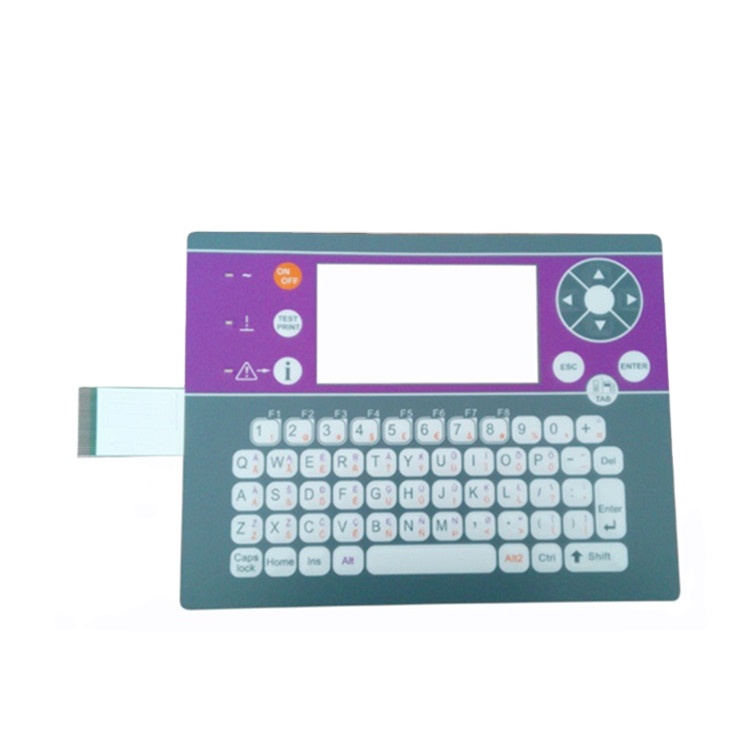
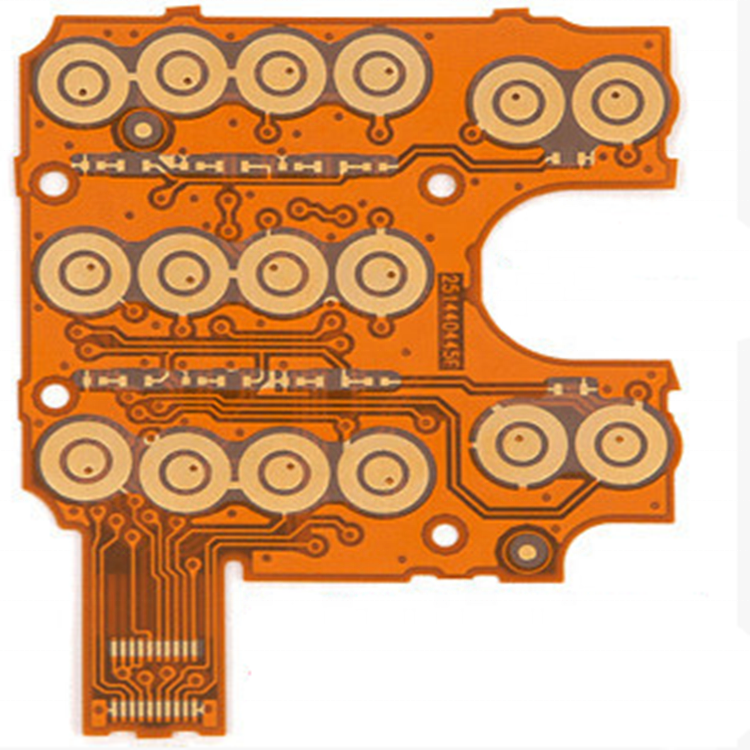
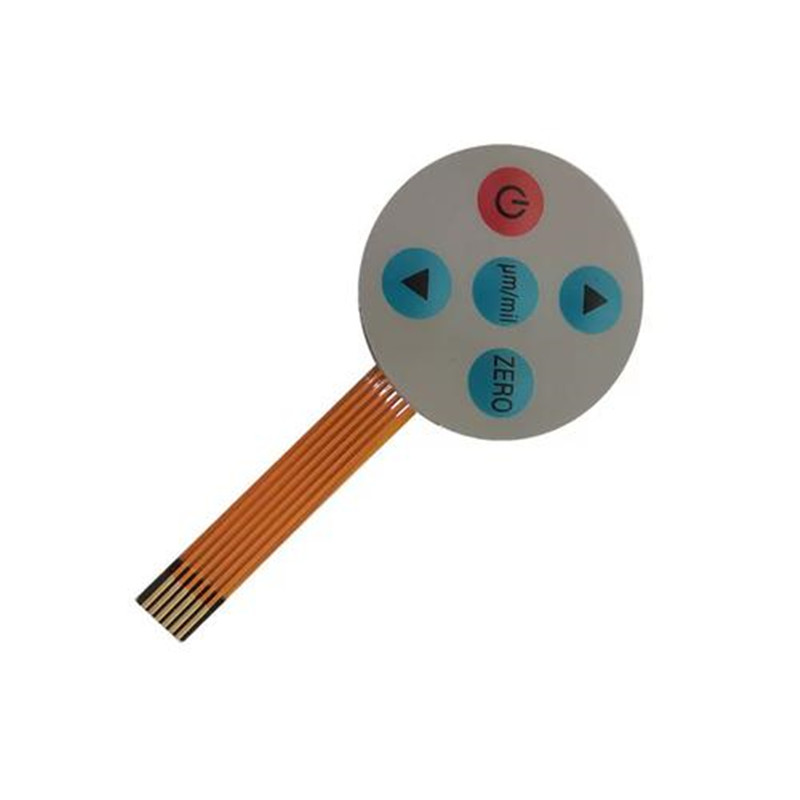
14+
Years International Verified Exporting
≤ 24h
Engineering DFM Review & Quoting
5 Pcs
Low Prototype MOQ for R&D Teams
100%
E-Test, AOI & RoHS Full Verification
Engineering Whitepaper & Technical Standards
Substrate Dynamics, Material Science & IPC Class 3 Specifications
A rigorous metallurgical and mechanical evaluation for engineers designing high-flex endurance systems in restricted mechanical envelopes.
Substrate Integrity: Polyimide (PI) vs. Polyester (PET)
For high-reliability electronic assemblies exported to Triesen and surrounding European industrial clusters, dielectric selection establishes the thermal ceiling and flexural longevity of the final assembly. While Polyester (PET) serves as a budget-conscious substrate for static membrane switch jumpers, Polyimide (PI)—specifically adhesiveless cast polyimide—remains mandatory for dynamic flexing and direct reflow SMT assembly.
Adhesiveless polyimide laminates eliminate acrylic or epoxy bonding films between the dielectric core and rolled annealed copper. This significantly reduces overall stack thickness, minimizes z-axis thermal expansion mismatch, and eliminates adhesive smear risks during micro-via CNC mechanical or UV laser drilling.
Critical Dynamic Bending Formula (IPC-2223):
To prevent copper work-hardening and fatigue cracking under dynamic flex conditions, the minimum bend radius $R$ must respect the total thickness $T$:
R ≥ 10 × T (Single-Sided Dynamic) | R ≥ 20 × T (Double-Sided Dynamic)
Where $T$ represents overall circuit stack thickness including base film, copper trace, and coverlay overlay.
Metallurgy: Rolled Annealed (RA) vs. Electro-Deposited (ED) Copper
The internal crystal lattice structure of the copper foil determines its fracture threshold when subjected to continuous cyclic fatigue. Shenzhen VUKO Electronics configures all dynamic FPC products with rolled annealed (RA) copper foil, in stark contrast to electro-deposited (ED) foils typical of rigid printed circuits.
- Rolled Annealed (RA) Copper: Possesses a horizontal, elongated grain structure forged via thermomechanical rolling. This configuration absorbs recurrent compression and tensile strain up to millions of continuous flex cycles.
- Electro-Deposited (ED) Copper: Exhibiting a columnar vertical microstructure, ED copper excels in fine-pitch high-definition etching for static bend-to-install profiles, but rapidly micro-fractures under dynamic hinge stresses.
- Coverlay vs. Flexible Solder Mask: We integrate thermosetting polyimide film bonded with modified high-temperature acrylic adhesive, delivering impenetrable dielectric barriers and dielectric breakdown strengths exceeding 5 kV/mil.
| Engineering Parameter | Standard Commercial Grade | VUKO High-Precision Capability | Compliance & Inspection Protocol |
|---|---|---|---|
| Layer Count Stack-Up | 1 – 4 Layers | 1 – 16 Layers (Rigid-Flex Hybrid) | IPC-6013 Class 2 & 3 Standard |
| Base Dielectric Core | 12.5μm – 25μm Standard PI / PET | Adhesiveless Polyimide (12.5μm / 25μm / 50μm) | IPC-4204A/11 Compliant |
| Minimum Line / Spacing | 0.075 mm / 0.075 mm (3/3 mil) | 0.035 mm / 0.035 mm (1.4/1.4 mil) | Automated Optical Inspection (AOI) |
| Controlled Impedance Tolerance | ± 10% | ± 5% (Single-Ended & Differential) | Time Domain Reflectometry (TDR) Tested |
| Surface Finishing Treatments | Lead-Free HASL / Flash Gold | ENIG (Electroless Ni / Immersion Au), Hard Gold, OSP | X-Ray Fluorescence (XRF) Coating Check |
| Reinforcement Stiffeners | Basic FR4 or Polyimide | Laser-cut Stainless Steel (SUS), Aluminum, FR4, PI | Multi-Pressure Thermal Bonding QC |
Regional Integration Focus
Mission-Critical Applications across Triesen's Industrial Landscape
Supporting high-complexity equipment manufacturers, laboratory sensor designers, and vacuum automation pioneers in the Rhine Valley mechatronics hub.
High-Precision Fastening & Heavy Tools
Embedded telemetry, brush-less DC (BLDC) motor commutation circuits, and shock-resistant multi-axis accelerometer assemblies for professional construction machinery.
- Shock-resistant stainless-steel bonded stiffeners
- High copper-weight trace capacity for surge pulses
- Resilient bonding against harmonic vibrations
Vacuum Instrumentation & Thin-Film Sensors
Ultra-low outgassing polyimide interconnects engineered for high-vacuum, mass spectrometry, and semiconductor processing sensing equipment.
- Zero halogen and low-outgassing bake-out conditioning
- Cryogenic to high-thermal cycling endurance (-40°C to +150°C)
- Electroless nickel immersion gold (ENIG) non-oxidizing pads
Dental & Medical Diagnostic Systems
Micro-pitch flex jumpers and tactile graphic overlays for ergonomic intraoral scanners, dental furnaces, and clinical diagnostic analyzers.
- Biocompatible overlay substrates with IP67 fluid sealing
- High-density fine-pitch interconnects down to 0.3mm FPC pitch
- Tactile gold-plated metal domes rated for 1M+ actuations
Market & Technology Evolution
Regional Technology Trends Transforming Alpine Mechatronics
How the engineering convergence in Triesen, Vaduz, and Buchs is shifting the baseline for flexible and rigid-flex circuit procurement.
Aggressive 3D Spatial Miniaturization
Traditional rigid boards interconnected by bulky wire harnesses are being systematically retired. Product designers in Triesen are transitioning to 3D fold-to-fit rigid-flex architectures that fold cleanly around internal motors, optical lenses, and battery bays, saving up to 60% mechanical volume.
High-Frequency Sensor Integration
With smart factories and IoT sensing moving into extreme environments, Alpine mechatronics demand low-loss flexible substrates capable of maintaining signal integrity up to 10 GHz. Liquid crystal polymer (LCP) and modified polyimide (MPI) selections offer low dielectric dissipation for RF transmission lines.
Supply Chain Resiliency via Direct EMS
Triesen procurement executives are actively reducing lead-time vulnerability by partnering directly with turnkey manufacturers who manage board fabrication, passive component kitting, and SMT assembly under a unified quality assurance guarantee, eliminating multi-vendor handoff frictions.
Why European OEMs Trust VUKO
Shenzhen VUKO Electronics Manufacturing Advantages
Combining Shenzhen's unmatched electronic component supply ecosystem with stringent European engineering and qualification standards.
14+ Years Verified Supplier
Onsite-audited by international inspection bodies and Alibaba.com. Complete trade transparency with Trade Assurance order protection on every commercial transaction.
24h Technical DFM Feedback
Our dedicated engineering group evaluates your Gerber RS-274X, ODB++, and BOM files within 24 hours, catching trace proximity, thermal bottlenecks, and bend-radius risks prior to tooling.
Turnkey Component Sourcing
Eliminate component shortages. Direct relationships with original semiconductor manufacturers and authorized distributors for authentic microcontrollers, passives, and discrete ICs.
Comprehensive Testing QC
Every flexible circuit and PCBA undergoes flying probe E-test, automated optical inspection (AOI), X-ray BGA alignment, and custom functional testing before vacuum packaging.
Procurement Intelligence
Frequently Asked Questions by Liechtenstein & Swiss Buyers
Essential technical, logistical, and commercial guidelines for hardware teams ordering custom FPC and PCBA assemblies from our Shenzhen facilities.
What specific file formats and fabrication notes should we submit for an accurate FPC quote?
For custom flexible circuits, we require standard Gerber (RS-274X) or ODB++ data packages, including Excellon drill files. Crucially, flex drawings must include an explicit fabrication drawing detailing layer stackup, material thickness (base PI, copper, coverlay), stiffener locations (FR4, polyimide, or stainless steel SUS), adhesive boundaries, selective surface finishes (e.g., ENIG vs. hard gold fingers), and any controlled impedance requirements.
How do you handle shipping, customs clearance, and import duties into Triesen, Liechtenstein?
Liechtenstein operates under a customs union with Switzerland (Swiss VAT and customs border rules apply). We ship regularly via DHL Express, FedEx Priority, and air freight forwarders providing Incoterms CIP, CPT, or DAP (and DDP options where preferred). All shipments include standard commercial invoices, packing lists with exact HS codes (e.g., 8534.00 for printed circuits), and certificate of origin documents to ensure smooth Swiss/Liechtenstein customs clearance.
What is your minimum order quantity (MOQ) for prototypes and low-volume pilot runs?
We support rapid R&D iteration with a prototype MOQ starting from just 5 pieces for custom FPC and PCBA projects. This allows engineering departments in Triesen to validate physical form, dynamic bending cycles, and signal transmission parameters before committing to high-volume production tooling. Mass production volumes then scale seamlessly without changing tooling standards.
Can VUKO handle fine-pitch SMT assembly directly onto flexible circuits (Flex PCBA)?
Yes. Assembling micro-components onto thin flexible polyimide requires specialized tooling fixtures, low-stress pallet carriers, and strict thermal profiling. Our SMT production lines feature precision high-speed placement heads capable of mounting 01005 passives, 0.3mm pitch BGAs, and fine-pitch QFNs onto FPC using lead-free reflow solders optimized to prevent substrate deformation.
How do you guarantee flex circuit trace integrity across dynamic bending cycles?
Trace failure in dynamic flexing is prevented during DFM and manufacturing via three rules: (1) Traces are oriented perpendicular to the bend axis; (2) Traces on double-sided flex are staggered rather than stacked directly on top of each other (neutral axis design); (3) We use rolled annealed (RA) copper exclusively for dynamic zones, verified through cyclic bending test fixtures before volume dispatch.
Are environmental compliance certificates provided for REACH, RoHS, and UL flammability?
Yes. All raw materials—polyimide cores, coverlays, adhesives, solder masks, and surface finishes—are fully compliant with RoHS 3 (Directive 2015/863/EU) and REACH (EC 1907/2006). Relevant UL 94V-0 flammability certificates and material declaration sheets (MDS) are delivered with the first article inspection (FAI) report.
Accelerate Your Hardware Development in Triesen
From initial Gerber DFM review and flex stackup optimization to quick-turn prototyping and volume electronics manufacturing service. Send us your design today for an engineering-led proposal within 24 hours.
ISO 9001 Certified Quality
UL 94V-0 Rated Laminates
IPC-6013 Class 3 Capability
Alibaba Trade Assurance Protected