Precision Assemblies & Specialized Hardware for Espoo Innovations
Engineered to withstand rigorous Nordic thermal cycles and stringent EMC thresholds. Discover our featured bare boards, turnkey assemblies, and thermal subsystems.
High-Reliability Flexible Printed Circuits (FPC): Substrates, Stack-ups, and Signal Integrity
In modern electronic system design, spatial constraints, mass optimization, and dynamic mechanical fatigue represent primary design boundaries. As engineering teams across the Greater Helsinki region—especially within the innovation clusters of Espoo, Otaniemi, and Keilaniemi—push the envelope in quantum measurement apparatus, sub-terahertz telecom systems, ruggedized industrial sensors, and wearable medical diagnostic instruments, planar rigid PCBs often impose severe volumetric and interconnect limitations. This engineering treatise outlines the core fabrication methodologies, polymer physical chemistry, and IPC-standard design rules governing custom Flexible Printed Circuits (FPC) and Rigid-Flex hybrids exported directly to Espoo's sophisticated hardware market.
1. Substrate Chemistry: Polyimide (PI) vs. Polyester (PET)
The foundational choice in flex circuit architecture rests upon selecting the appropriate base dielectric film. The two dominant polymer chemistries utilized at Shenzhen VUKO Electronics are Polyimide (PI) and Polyethylene Terephthalate (PET):
- Polyimide (PI / Kapton®): Exhibiting exceptional glass transition temperatures ($T_g > 300^\circ\text{C}$), polyimide remains the industrial standard for aerospace, telecommunications, and multi-zone SMT assembly. PI demonstrates superior dielectric stability ($D_k \approx 3.2 - 3.4$ at 1 GHz) and loss tangent ($D_f \approx 0.002 - 0.008$), rendering it essential for impedance-controlled, high-speed differential pairs (e.g., PCIe Gen 4/5, MIPI CSI-2, and USB4). Furthermore, PI withstands lead-free solder reflow profiles exceeding $260^\circ\text{C}$ without molecular degradation or dimensional shrinkage.
- Polyester (PET): Characterized by lower thermal endurance ($T_g \approx 70^\circ\text{C} - 80^\circ\text{C}$), PET is primarily suited for cost-sensitive, static membrane keypads and low-frequency interconnect tails where wave or reflow soldering is replaced by isotropic conductive adhesives (ICA) or anisotropic conductive films (ACF).
2. Adhesiveless vs. Adhesive-Based Flexible Copper Clad Laminates (FCCL)
Early-generation flexible circuits relied heavily on modified acrylic or epoxy adhesives to bond the electro-deposited (ED) or rolled-annealed (RA) copper foil to the dielectric film. However, for hardware applications requiring harsh environmental endurance—such as sub-zero maritime monitoring in the Gulf of Finland or deep-cryogenic quantum sensor interfaces at VTT Otaniemi—adhesiveless FCCL is the mandatory specification.
Adhesiveless laminates eliminate the epoxy interface layer entirely, cast polyimide resin directly onto the copper foil, or use direct sputtering/metallization. This architectural advantage provides three critical failure-mitigation factors: superior thermal dissipation, minimized outgassing under ultra-high vacuum conditions, reduced z-axis thermal expansion ($CTE_z$), and vastly enhanced bending endurance under dynamic flexure.
| Engineering Property | Adhesive-Based Flex Clad (3-Layer) | Adhesiveless Flex Clad (2-Layer) | Design Benefit for Nordic Engineers |
|---|---|---|---|
| Thermal Rating (Operating) | -40°C to +105°C | -55°C to +150°C (Up to 260°C peak) | Survives sub-arctic deep freezes & industrial reflow |
| Dielectric Constant ($D_k$ @ 1GHz) | 3.4 – 3.7 | 3.1 – 3.3 | Low capacitive loading; precise 50Ω/90Ω matching |
| Dissipation Factor ($D_f$ @ 1GHz) | 0.015 – 0.025 | 0.002 – 0.006 | Crucial for 5G millimeter-wave & high-rate signals |
| Bend Radius Performance ($R/T$ Ratio) | Static: 10:1 | Dynamic: Not recommended | Static: 6:1 | Dynamic: > 1,000,000 cycles | Long lifespan in robotics, foldables, and drones |
| Dimensional Stability | 0.12% - 0.18% | < 0.05% | Tight multi-tier SMT pad alignment down to 01005 / 0.35mm BGA |
3. Dynamic Flex vs. Static Bend: Copper Grain Metallography
A frequent root cause of flexural circuit failure in robotic and hinge mechanisms is metal fatigue resulting from improper copper foil selection. Flex PCBs manufactured by Shenzhen VUKO Electronics utilize two distinct microstructural copper classifications:
- Rolled Annealed (RA) Copper: Produced via rigorous mechanical roll-compression, yielding elongated, planar crystal grains parallel to the foil surface. RA copper provides the highest resilience against cyclic fatigue. For dynamic applications (such as automated gantries, wearable sensors, or camera gimbal actuators), RA copper is strictly specified with the bend axis oriented 90° perpendicular to the longitudinal grain direction.
- Electro-Deposited (ED) Copper: Grown via electrolytic acid-bath plating, producing vertical columnar grains. While ED copper delivers superior adhesion for fine-pitch microvias and complex 4+ layer multilayer stack-ups, its brittle vertical structure makes it vulnerable under tight continuous dynamic flexing, restricting its optimal deployment to static "flex-to-install" assemblies.
4. Rigid-Flex Stack-up Architecture & Transition Zone Integrity
Rigid-Flex printed circuit boards represent the apex of 3D spatial integration. By laminating polyimide flex layers directly within FR4 glass-epoxy rigid carrier panels, hardware designers completely eradicate wire harnesses, crimp pins, and board-to-board mezzanine connectors. This yields a massive leap in mean time between failures (MTBF), decreases total volumetric weight by up to 60%, and solves tight packaging envelopes inside handheld test instruments, smart energy monitors, and medical endoscopes.
The primary point of mechanical stress in any rigid-flex design occurs at the Rigid-to-Flex Transition Boundary. To guarantee absolute field reliability, VUKO enforces strict DFM guidelines:
- Bead Strain Relief: We apply an automated, controlled-viscosity polyurethane or UV-curable flexible epoxy bead directly along the outer edge of the rigid interface, dampening mechanical stress concentrations and preventing foil fracture during bending.
- Staggered Coverlay Lamination: Overlapping the polyimide coverlay minimum 0.8 mm into the rigid zone prevents copper trace exposure during drilling and mechanical de-paneling.
- Via Placement Offsets: Plated through-holes (PTH) and microvias must remain isolated at least 1.2 mm away from the bend initiation line to avoid shear delamination under thermal shock.
Espoo: The High-Tech Engine of Finland and the Nordic Silicon Hub
Bridging Shenzhen’s end-to-end manufacturing power with the cutting-edge R&D labs of Otaniemi, Keilaniemi, and the broader Uusimaa innovation corridors.
Otaniemi Innovation District
Home to Aalto University, VTT Technical Research Centre of Finland, and numerous quantum computing start-ups. These facilities demand rapid-iteration prototype flex circuits with sub-mil trace/space precision, gold immersion finishes (ENEPIG/ENIG), and cryogenic stability.
5G / 6G & Telecoms R&D
Keilaniemi serves as the international hub for telecommunications giants and RF hardware pioneers. Our low-loss, adhesiveless high-frequency polyimide flex boards provide the low attenuation and tight characteristic impedance ($50\Omega \pm 5\%$) needed for massive MIMO and sub-THz test antennas.
Nordic Climate Durability
Hardware deployed in Finland must routinely survive cyclic thermal shocks ranging from -40°C in bitter winter conditions to +65°C inside industrial enclosures, resisting moisture ingress, condensation, and mechanical embrittlement through MIL-STD and IPC Class 3 quality protocols.
Mission-Critical Deployments Across Finland’s Premier Industries
From cryogenic test stands to maritime smart-ship navigation, Shenzhen VUKO flex and rigid-flex technologies empower real-world systems across Finland.
Cleantech & Smart Grid
Multi-layer flex strips with integrated NTC thermistors and current shunt sensors utilized for battery management systems (BMS) in Nordic electric utility vehicles and energy storage systems (BESS).
Medtech & Patient Wearables
Ultra-thin 0.05 mm biocompatible polyimide interconnects connecting electro-cardiac and photoplethysmography sensors for high-comfort healthcare diagnostics in Helsinki and Espoo clinics.
Maritime & Port Automation
Heavy-copper (up to 3 oz) rigid-flex boards with IP67 conformal coatings, engineered for remote crane telemetry, autonomous vessel lidar, and harsh marine environments in Vuosaari and Kotka.
Industrial HMI & Robotics
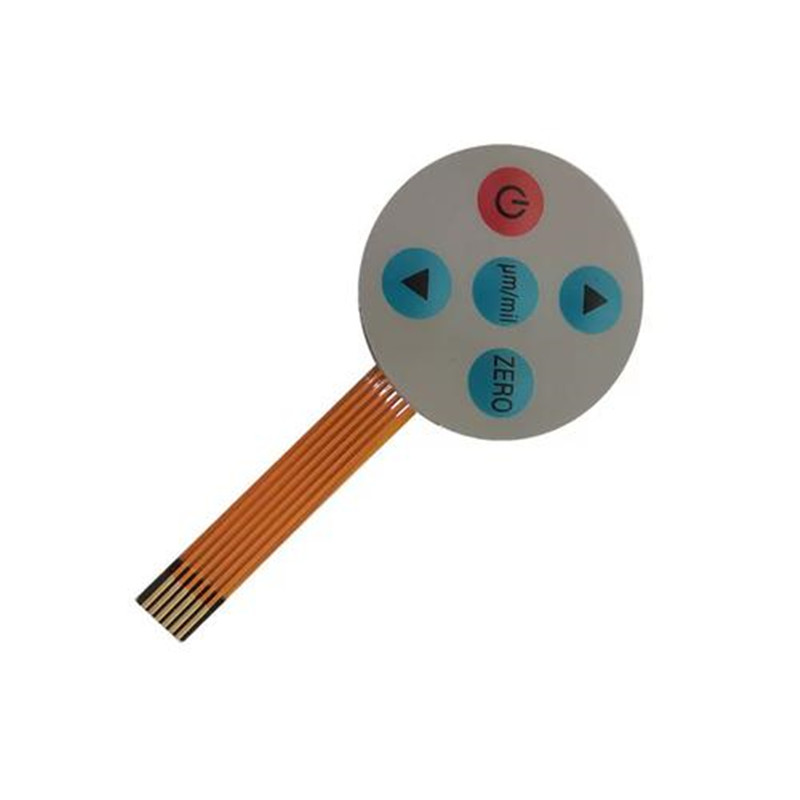
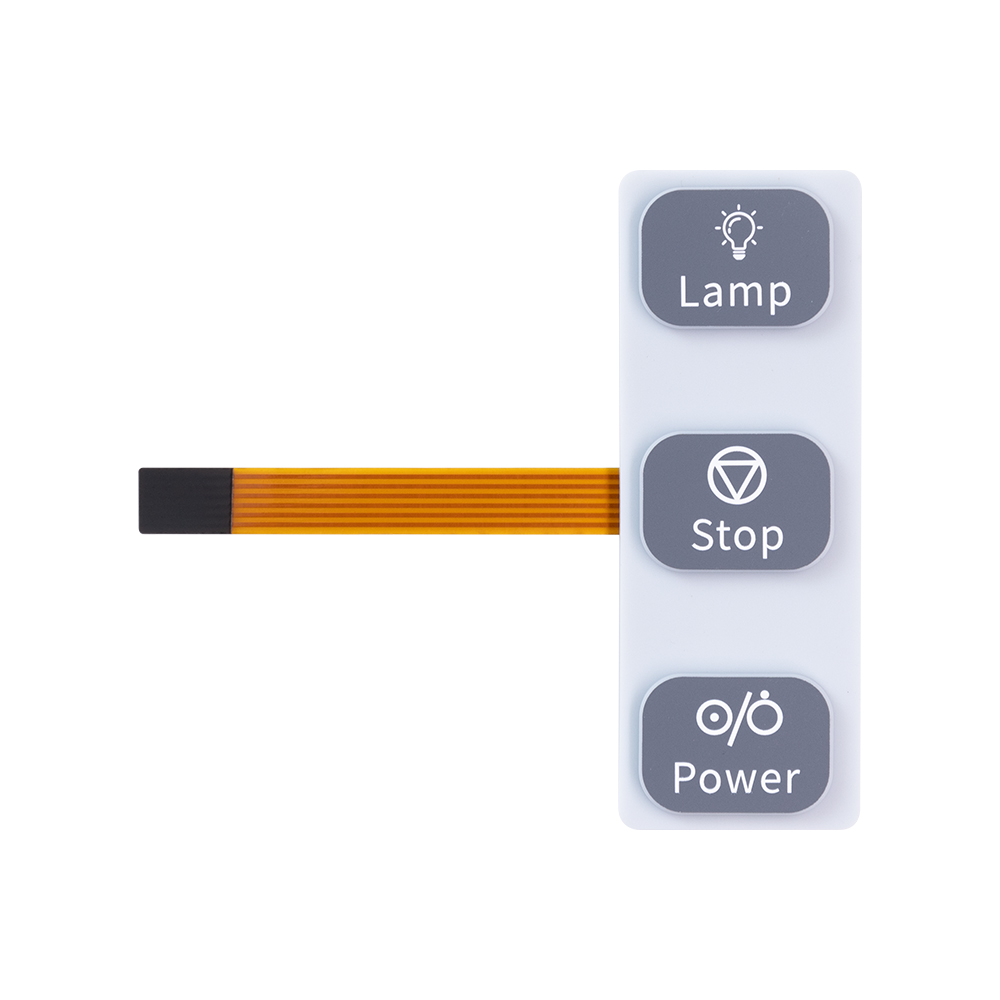
Seamlessly integrated membrane switches with tactile metal domes and FPC tails, providing durable, sealed operator controls for forestry machines, mining equipment, and industrial chillers.
Emerging Trends & Strict European Compliance Standards
Nordic buyers prioritize strict compliance with EU ecological directives, raw material traceability, and minimal lifecycle carbon emissions.
RoHS, REACH & Halogen-Free
All substrates, solder pastes, coverlays, and plating chemistries exported to Espoo strictly comply with EU Directive 2011/65/EU (RoHS 3) and EC 1907/2006 (REACH). Zero brominated flame retardants are utilized across our halogen-free polyimide ranges.
Fast-Track NPI to Serial Production
Espoo's vibrant venture capital and university incubator ecosystem mandates fast NPI (New Product Introduction). We support quick-turn bare-board prototypes within 3–5 working days and full turnkey SMT PCBA prototypes within 8–10 working days.
Consolidated Turnkey Box-Build
Rather than managing split vendors for bare boards, components, membrane interfaces, and plastic/aluminum enclosures, Finnish procurement teams leverage our consolidated Shenzhen assembly floor to significantly decrease handling overhead and customs friction.
Frequently Asked Questions by Finnish Engineers & Buyers
Detailed technical, logistical, and commercial inquiries answered directly by our engineering desk.
What engineering documentation is required for an accurate FPC / Rigid-Flex quotation?
To formulate an authoritative DFM review and exact quotation within 24 hours, our engineering team requires: (1) Standard RS-274X or ODB++ Gerber files including drill and route layers; (2) Mechanical layer drawing specifying overall outline, bend radii, stiffener materials (FR4, PI, or stainless steel), and 3M adhesive tapes; (3) Layer stack-up detail detailing copper weight (0.5 oz, 1 oz, or 2 oz), polyimide core thickness, and coverlay thickness; and (4) SMT assembly BOM with verified manufacturer part numbers (MPNs) if turnkey component assembly is required.
How does Shenzhen VUKO ensure flex circuit survival in harsh -40°C Finnish winters?
We specify exclusively adhesiveless rolled-annealed (RA) copper clad polyimide laminates that exhibit matched coefficients of thermal expansion ($CTE$). Before dispatch, bare boards undergo IPC-TM-650 2.6.8 thermal stress testing, and assembled boards are validated through multi-cycle thermal chamber shock testing (-40°C to +125°C) to ensure zero micro-cracking in through-hole plating barrels or SMT solder joints.
What is your minimum order quantity (MOQ) for custom prototypes destined for Espoo?
Our prototyping MOQ begins at just 5 pieces. We recognize that start-ups and R&D groups across Otaniemi often require small-batch proof-of-concept (PoC) builds before committing to serial mass manufacturing. Our quick-turn prototype lines mirror our high-volume production parameters, ensuring seamless scalability without requalification delays.
Can you handle complete turnkey BOM sourcing, including obsolete or constrained microchips?
Yes. Backed by Shenzhen’s hyper-dense component distribution network, our procurement specialists maintain direct relationships with authorized tier-1 distributors and verified independent channels. We proactively audit your Bill of Materials during quotation, flagging high-risk lead times or end-of-life (EOL) chips, and proposing pin-to-pin, functionally equivalent, automotive/industrial-grade replacements with complete component traceability.
How are shipments handled into Finland, and how is payment protected?
We deliver routinely via DHL Express, FedEx, and UPS Priority air freight, with standard transit times into Helsinki-Vantaa Airport (HEL) averaging 3 to 5 business days. All shipments include complete commercial invoices, packing lists, Certificate of Conformance (CoC), and RoHS declarations for effortless Finnish Customs (Tulli) clearance. For commercial security, orders can be protected through Alibaba.com Trade Assurance, safeguarding payments until physical delivery and functional approval.
Why Espoo Technology Leaders Choose Shenzhen VUKO Electronics
Combining 14+ years of verified international export expertise with full-stack electronic manufacturing under one roof.
Front-End DFM Review Within 24h
Our senior CAM and process engineers evaluate your Gerber package before quoting, identifying impedance deviations, annular ring violations, and tight bend issues early to prevent costly board re-spins.
Complete All-In-One EMS Ecosystem
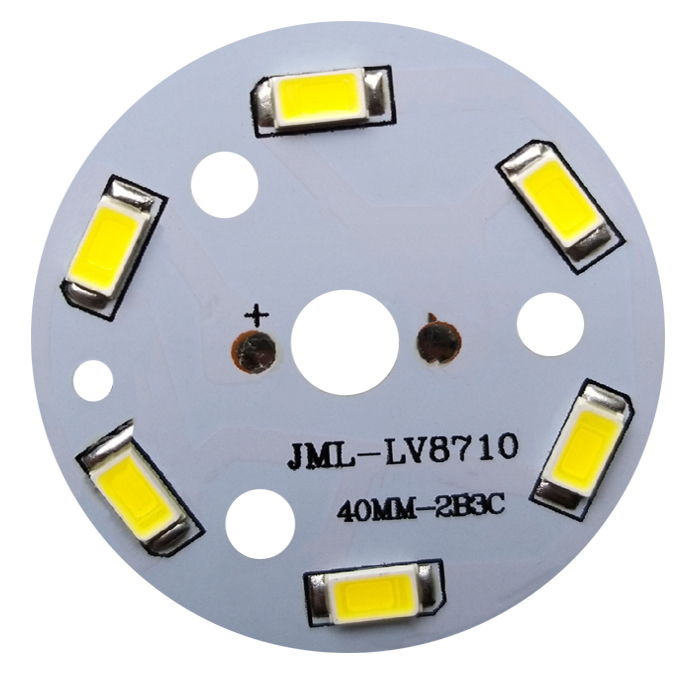
Eliminate multi-vendor friction. We fabricate bare rigid PCBs (1–12+ layers), complex FPCs, metal-core aluminum boards, assemble surface-mount components, and integrate custom graphic membrane switches in-house.
Zero-Defect Quality Assurance
Every flexible circuit batch undergoes 100% automated optical inspection (AOI), flying-probe electrical continuity testing, solderability assessment, and micro-section dimensional verification to guarantee absolute adherence to IPC-6013 Class 2 and Class 3.
Accelerate Your Hardware Development in Espoo Today
Connect directly with our engineering and export desk. Send your Gerber archives and BOM lists for a comprehensive DFM audit, exact pricing schedule, and full product technical catalogs.