Featured Industrial Components & Integrated HMI Solutions
Precision electronic assemblies, ruggedized switch matrices, and thermal modules designed for seamless integration into marine consoles, industrial automation controllers, and IoT edge hardware.
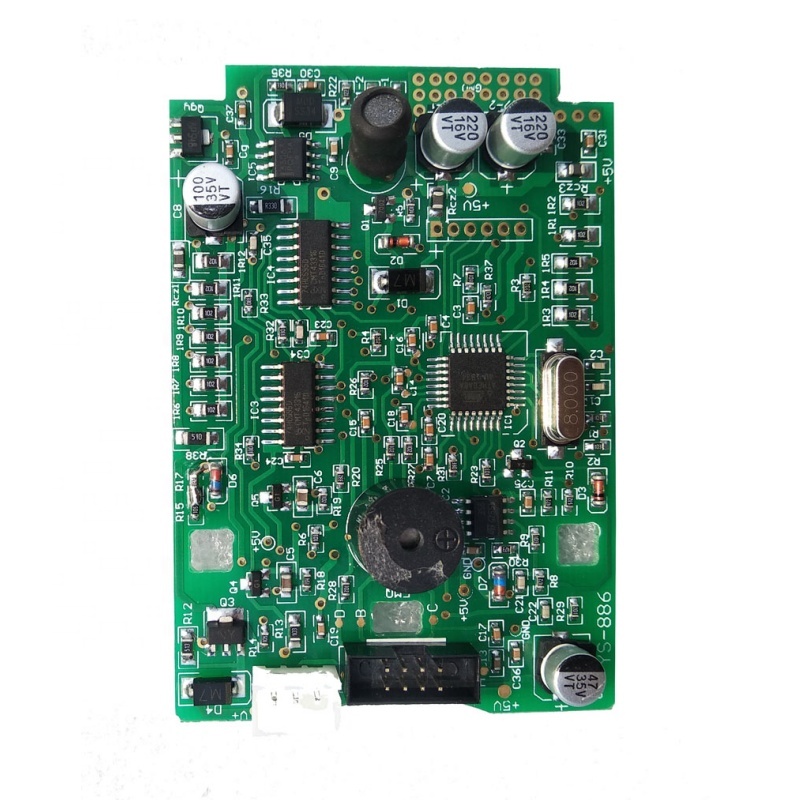
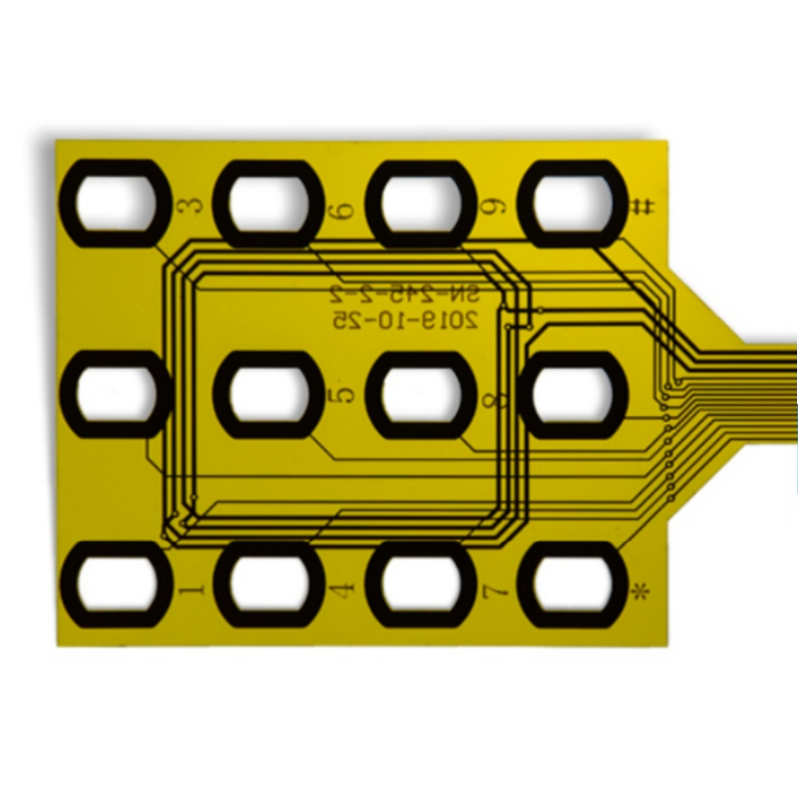
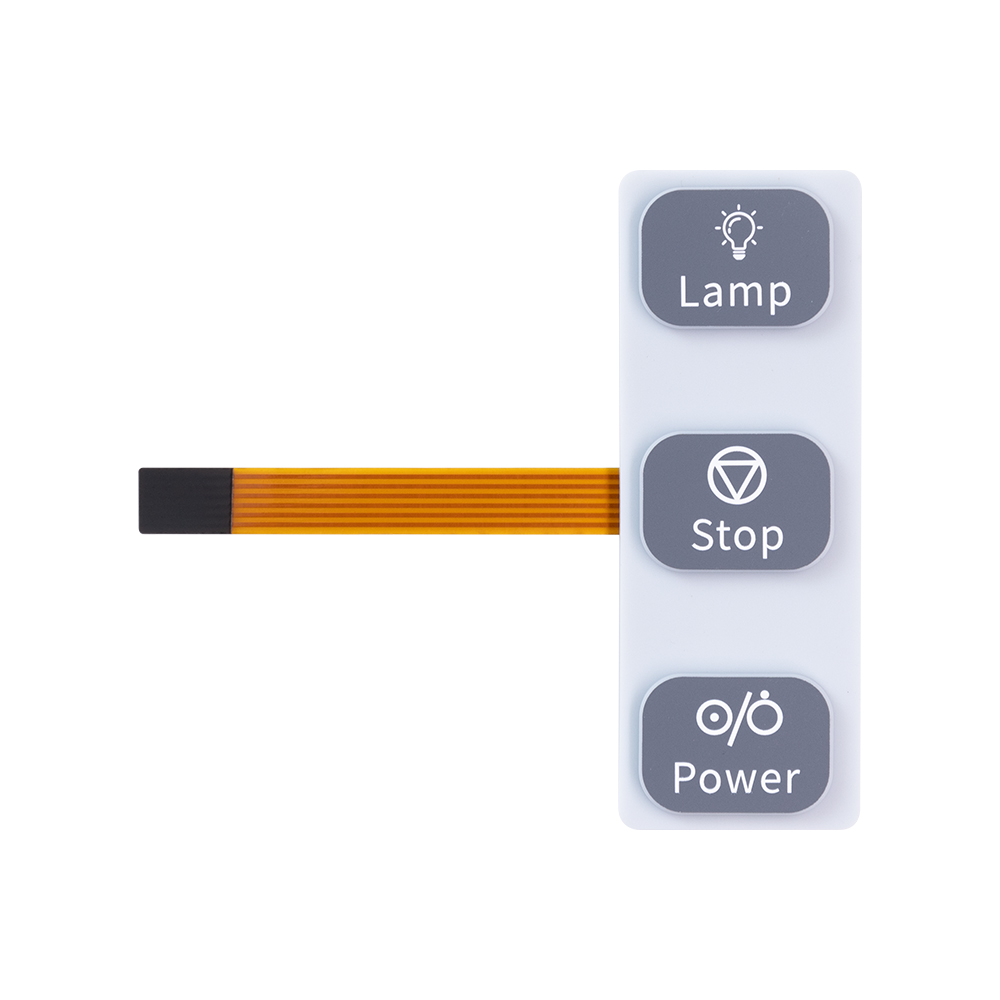
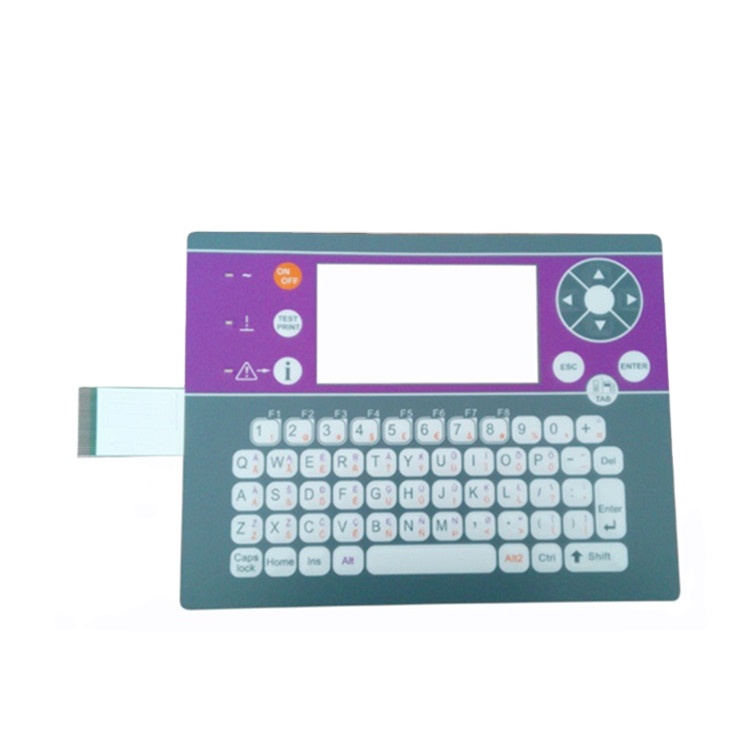
Engineering Architecture of High-Reliability Membrane Switch Assemblies
A granular examination of multi-layer laminates, conductive metallurgy, contact mechanics, and barrier chemistry designed to survive extreme thermal, mechanical, and chemical operating environments.
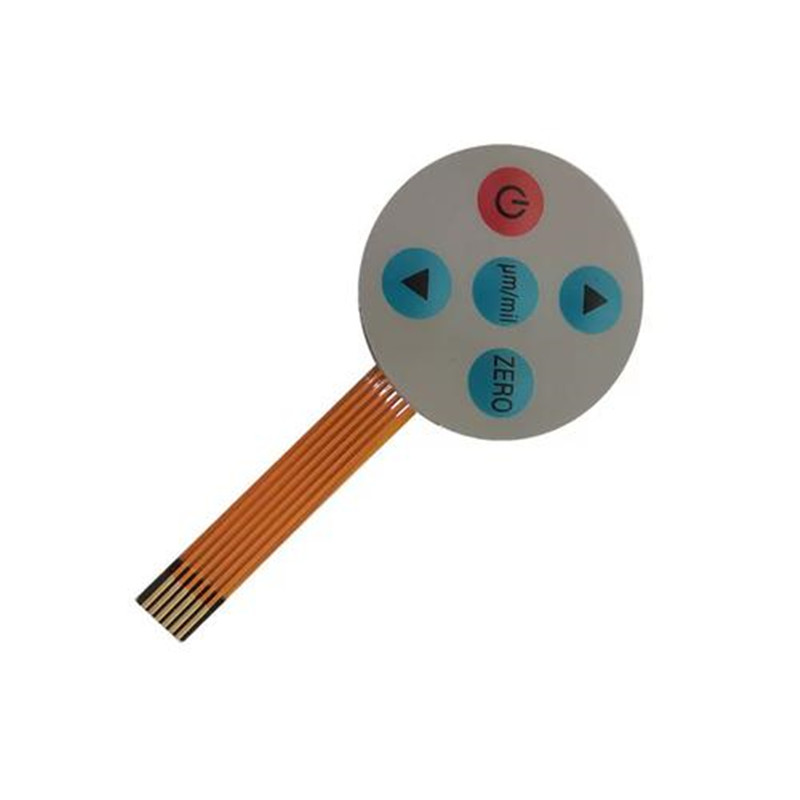
Modern human-machine interfaces (HMIs) operating in high-demand industrial contexts are far more than aesthetic front panels. At Shenzhen VUKO Electronics Co., Ltd., our membrane switch assemblies are engineered as complete multi-layer optoelectronic control systems. The fundamental cross-section comprises an engineered stack-up: an environmentally stabilized graphic overlay, optical-grade sub-surface adhesives, upper tactile retention circuits, precision metal-dome actuators, spacer layers with micro-venting channels, printed silver or photo-etched copper trace circuitry, and heavy-duty structural rear adhesives from the 3M 200MP, 300LSE, or VHB families.
The structural durability of a membrane switch in demanding operating conditions hinges on substrate selection. For installations across the Marmara region—characterized by salty maritime air, aggressive workshop solvents, and elevated humidity—we utilize biaxially oriented polyester (PET) films, such as Autotex XE or MacDermid Autotype, rather than standard polycarbonate (PC). Polycarbonate films, while cost-effective and optically clear, undergo micro-cracking and embrittlement under continuous ultraviolet (UV) solar radiation and cyclic exposure to aliphatic hydrocarbons or cleaning spirits. Autotex PET provides a flexural life exceeding 5 million switch actuations, complete resistance to UV yellowing, and an impermeable barrier against saline penetration.
Silver-Migration Prevention
Standard screen-printed silver ink tends to migrate under dendritic electro-chemical reaction when high humidity and DC bias voltages coexist. We apply a complete carbon/graphite conductive overprint over all silver pads and trace junctions, eliminating ionic electro-migration even under 95% RH testing conditions.
Tactile Actuation Kinetics
We incorporate precision four-legged stainless steel metal domes (nickel-plated or gold-plated) ranging from 6mm to 20mm in diameter, with snap force profiles calibrated between 250g and 500g. This crisp sensory tactile feedback ensures operators wearing heavy industrial protective gloves receive definitive tactile feedback on input execution.
Multi-Tier Environmental Sealing
By engineering continuous perimeter gasket channels utilizing custom-die-cut closed-cell acrylic foam adhesives (3M 300LSE/467MP), our panels achieve continuous IP65, IP67, and IP68 hermetic ingress ratings, sealing completely against water washdowns, hydraulic oil splashes, and airborne particulate infiltration.
Internal Venting Dynamics & Barometric Equilibrium
A frequent cause of premature membrane keypad failure in rugged environments is internal cavity pressurization. When equipment moves between temperature extremes (such as cold maritime environments at night to heat-saturated engine bays during midday operation), air trapped within the dome spacer cavities expands or contracts. If unvented, this pressure differential causes switch actuation forces to fluctuate wildly, or induces pillowing of the overlay, breaking the perimeter adhesive seal.
To resolve this engineering challenge without sacrificing IP67 protection, VUKO implements engineered internal serpentine breathing channels. Rather than venting to the exterior atmosphere, the dome cavities are interconnected through micro-routed spacer channels leading to a dedicated internal equalization reservoir, or vented internally through the tail egress slot into the host enclosure. For direct outdoor marine and automotive applications, breathable hydrophobic/oleophobic ePTFE membranes (Gore-compatible membranes) are micro-bonded over exhaust apertures, permitting instantaneous gas normalization while stopping water droplets, salt spray, and condensation from entering the switch matrix.
Mission-Critical HMI Deployments Serving Tuzla's Strategic Industries
Engineered human-machine interface assemblies tailored to the unique operational environments, regulatory standards, and mechanical stresses of Tuzla's industrial manufacturing hubs.
Tuzla Shipyards & Marine Electronics
As Turkey’s foremost shipbuilding, repair, and naval defense epicenter, Tuzla Shipyards require marine-grade wheelhouse consoles, winch remote controllers, ballast monitoring panels, and engine room interface assemblies. Our membrane assemblies for this sector feature UV-stabilized Autotex coatings, anti-glare display windows, salt-fog resistance tested per ASTM B117 (over 500 hours), and high-reliability backlighting via side-firing SMD LEDs or custom light guide films (LGF) to ensure 24/7 visibility on open bridges.
TOSB & Automotive Component Clusters
In the TOSB (Automotive Supply Industry Specialized Organized Industrial Zone) corridor adjacent to Tuzla, OEMs manufacture commercial vehicle sub-assemblies, specialty truck chassis, and off-highway construction machinery. VUKO supplies custom rigid-flex and FPC-backed membrane switch keypads capable of enduring constant engine vibration, rapid temperature shock (-40°C to +85°C), and chemical exposure to diesel, brake fluids, and degreasing agents.
Tuzla Birlik, DES & Machinery Automation
Spanning Tuzla Kimyacılar (Chemical) OSB, Birlik OSB, and the neighboring DES Sanayi Sitesi, heavy industrial processing lines require explosion-safe, dust-proof operator stations. We deliver ATEX-compatible non-sparking switch matrices, integrated with ESD/RFI aluminum foil shielding layers that ground static charges up to 15kV, shielding sensitive digital control logic boards from electrical transients and magnetic interference.
HMI Evolution across Turkey's Marmara Industrial Corridor
Emerging technological shifts in user interface procurement, supply chain diversification, and hardware-level connectivity driving engineering demand in Tuzla.
Hybrid Capacitive-Tactile Switch Panels
Turkish machinery makers are moving away from traditional mechanical push-buttons toward flat, unified front panels that merge capacitive slider touch technology with embossed metal-dome tactile keys for critical Emergency-Stop (E-stop) and reset operations.
FPC Substrates Replacing Screened Silver
With component pitch dropping below 1.0mm and high-density micro-controllers mounted directly to the keypad tail, copper-etched Polyimide FPC substrates are rapidly superseding silver-paste screen printing, lowering track resistance below 0.1 Ω/cm.
Turnkey Rigid-Backer Assemblies
Engineering departments in Istanbul increasingly seek unified electromechanical subassemblies. Instead of sourcing bare membrane overlays, aluminum back-plates, and internal PCBA controllers separately, procurement teams specify complete turn-key box-build modules tested under one roof.
Direct Shenzhen Sourcing Resilience
To mitigate the rising costs and long delivery queues of domestic European intermediaries, Turkish OEMs are optimizing direct manufacturer channels into Shenzhen. By locking in direct engineering DFM reviews and standardized Alibaba Trade Assurance protection, they achieve 35-45% BOM cost savings.
Technical Matrix: Conductive Substrate Architectures
Evaluating performance metrics, electrical properties, and cost allocations across Silver-Printed PET, Copper Flexible Printed Circuits (FPC), and Rigid FR4 PCB Backplates.
| Performance Parameter | Silver-Printed PET Flex | Copper Etched Polyimide (FPC) | Rigid FR4 PCB-Backed Matrix |
|---|---|---|---|
| Trace Resistance | 10 – 100 Ω (Depends on run length) | < 0.5 Ω (High-speed signaling) | < 0.1 Ω (Superior current capacity) |
| Fine Pitch Capability | 1.0 mm – 1.27 mm standard | Down to 0.3 mm (Ultra-fine pitch) | Down to 0.2 mm (Dense BGA/SMT) |
| SMD Component Mounting | Conductive epoxy bonding only (LEDs) | Standard lead-free reflow soldering | High-temp lead-free wave & SMT reflow |
| Moisture / Silver Migration | Requires carbon overprint barrier | Immune (Metallic solid copper traces) | Immune (Standard solder mask + ENIG) |
| Mechanical Rigidity | Purely flexible; requires host chassis | Thin & flexible (Supports stiffeners) | Self-supporting structural front panel |
| Actuation Lifespan | > 1,000,000 cycles | > 5,000,000 cycles | > 5,000,000 cycles |
| Tooling & Unit Cost Ratio | Lowest Initial NRE | Moderate NRE / Low unit cost at scale | Higher tooling / Ideal for full turnkey |
Why Marmara Engineers & OEMs Partner with Shenzhen VUKO
Bridging high-speed Chinese manufacturing power directly to Turkish industrial corridors with unmatched precision, transparency, and rapid delivery.
Full Turnkey Stack Under One Roof
Unlike regional brokers who outsource circuit printing to one shop and PCBA to another, VUKO manufactures bare PCBs (1-12+ layers), populates SMT/DIP assemblies, fabricates FPCs, cuts aluminum core boards, and prints graphic overlays inside our vertically integrated Shenzhen facilities.
Rapid DFM & 24-Hour File Verification
Our engineering staff reviews your RS-274X Gerber packages, BOM component listings, and mechanical drawings within 24 hours. We flag track-to-edge clearances, dome contact spacing, obsolete semiconductor MPNs, and adhesive die-lines before cutting tooling, eliminating re-spins.
Low MOQ Prototyping (From 5 Pieces)
We respect the iterative R&D cycles of specialized machinery builders. You do not need to commit to thousands of units upfront; our pilot membrane keypad runs, custom FPCs, and PCB assemblies start from just 5 pieces for initial field testing and qualification.
Frequently Asked Questions for Tuzla Engineering & Sourcing Teams
Clear, unambiguous answers concerning customs clearance, material testing, shipping timelines to Istanbul, and engineering tolerances.
We supply fully itemized commercial invoices, packing lists with detailed HS codes (e.g., 8537.10 for membrane switch assemblies, 8534.00 for printed circuits), and Certificates of Origin. Our logistics team works with express carriers (DHL, FedEx, UPS) and air-cargo forwarders flying directly into Istanbul Airport (IST) or Sabiha Gökçen Airport (SAW), situated just 15 minutes from Tuzla’s industrial zone. DAP or DDP terms can be coordinated to facilitate smooth Turkish customs clearance.
Yes. We construct marine-grade switch assemblies utilizing high-grade Autotex XE polyester films coupled with continuous 3M 300LSE/468MP acrylic adhesive perimeter seals. Furthermore, all internal copper/silver traces are fully encapsulated without exterior atmospheric venting channels. Our marine assemblies are tested to withstand over 500 hours of 5% neutral salt spray per ASTM B117 standards without ingress, trace oxidation, or overlay delamination.
To provide an exact quote and technical audit, we require: (1) Vector graphic artwork in Adobe Illustrator (.AI), CorelDraw (.CDR), or Vector PDF format showing graphic overlay layers, pantone colors, and embossed key boundaries; (2) Mechanical dimensional drawings (DXF/DWG/STEP) specifying tail length, pinout pitch, and adhesive cut-outs; (3) Schematic or circuit netlist; and (4) BOM (Bill of Materials) if SMD LEDs, resistors, or custom connectors are populated.
Prototype samples (5 to 10 pcs) typically require 7 to 10 business days for laser tooling, screen printing, lamination, and automated electrical testing. Volume production batches take approximately 12 to 18 business days depending on complexity. Express international air transit from our Shenzhen facility to Sabiha Gökçen or Istanbul Airport typically takes 3 to 5 business days.
100% of all membrane switches manufactured by VUKO undergo computerized electrical continuity and insulation resistance testing on dedicated automated switch test benches before packaging. We inspect contact resistance, loop resistance, insulation isolation (>100MΩ at 100V DC), tactile actuation curve verification, and LED forward voltage/color uniformity. Bare boards receive flying probe/AOI tests, and PCBA modules are functionally verified.
To give our Turkish buyers complete peace of mind, all transactions can be secured via Alibaba Trade Assurance. This ensures your capital is protected against production delays or non-compliance to agreed engineering specifications. Payment terms including wire transfer (T/T), PayPal, and Letters of Credit (L/C) are also supported for qualified high-volume corporate accounts.
Accelerate Your HMI Hardware Development Today
Whether you are designing an offshore marine monitoring station in the Tuzla Shipyard corridor, upgrading an automotive chassis console in TOSB, or engineering a high-speed packaging controller, VUKO provides the certified technical excellence, rapid turnaround, and competitive factory pricing your projects require.