Featured Electronics & HMI Manufacturing Portfolio
Direct-from-factory electronic assemblies, multilayer substrates, flexible printed circuitry, and custom human-machine interfaces engineered for European OEM reliability.
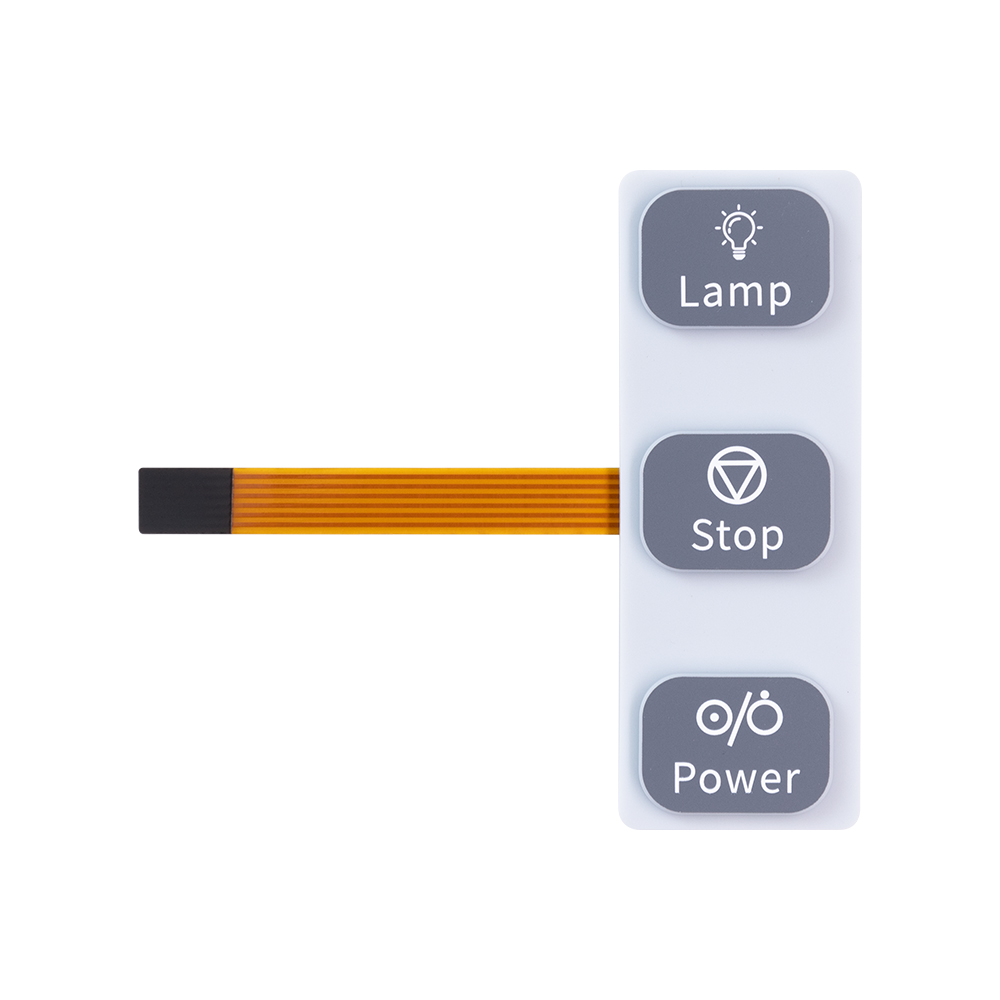
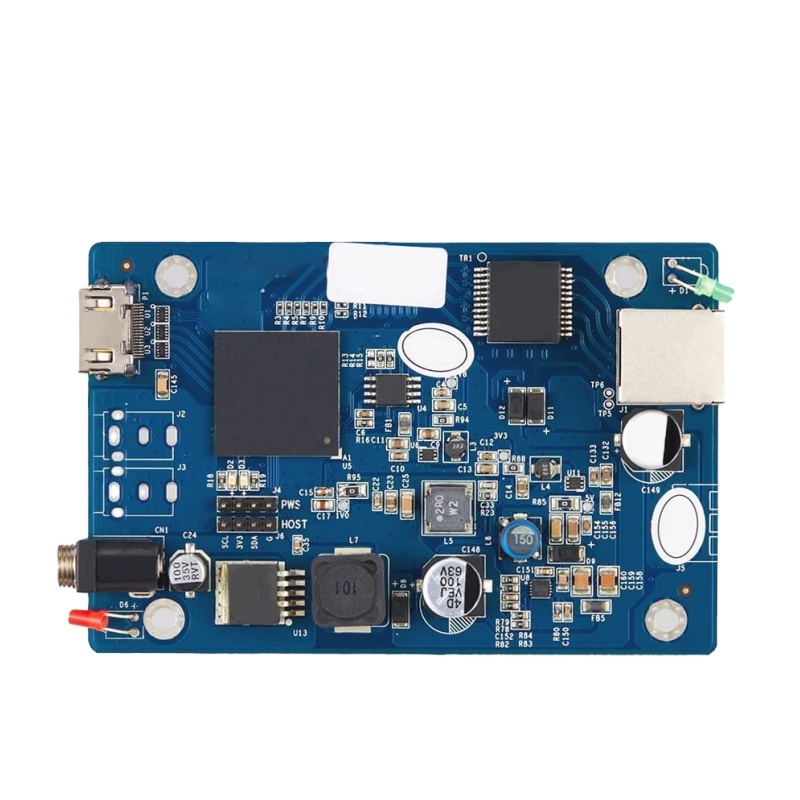
Non-Tactile Membrane Switches in the Tartu High-Tech Ecosystem
Tartu, historically recognized as the intellectual capital of Estonia, has rapidly emerged as a primary deep-tech, biotechnology, and autonomous systems epicenter across the Baltic Sea region. Spearheaded by institutions such as the University of Tartu Institute of Technology, Tartu Science Park, and cutting-edge commercial spin-offs in Maarjamõisa, local original equipment manufacturers (OEMs) demand human-machine interface (HMI) hardware that surpasses conventional consumer standards.
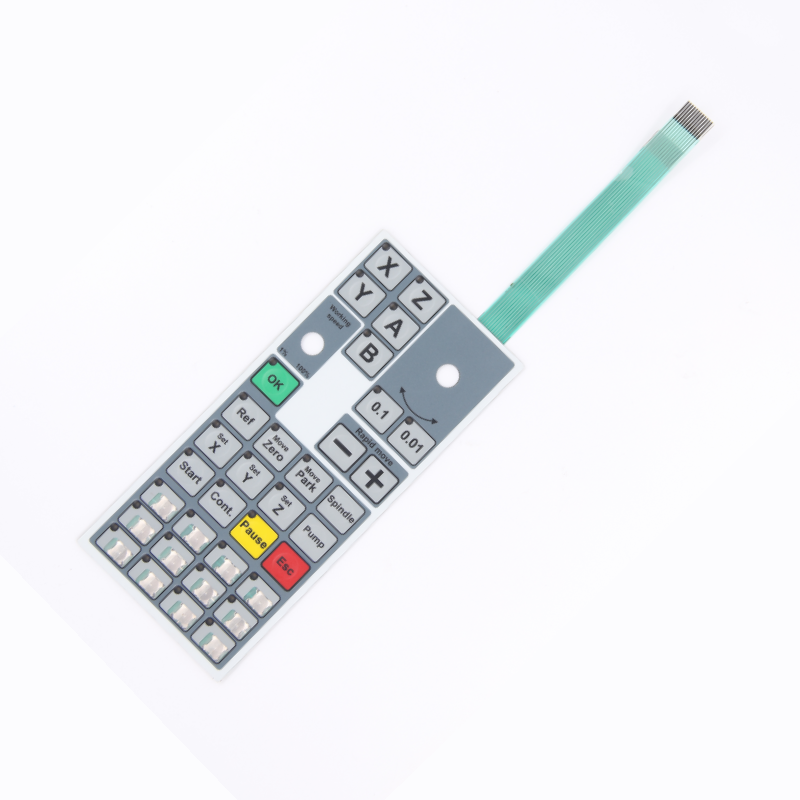
In high-precision laboratory analytical devices, cryogenic biological freezers, smart agricultural field instrumentation, and autonomous mobile robots (AMRs) operating in Baltic climates, mechanical tactile keypads with stainless steel domes present inherent physical vulnerabilities. Non-tactile membrane switches have become the engineering benchmark for mission-critical deployments across Tartu. By eliminating moving metal parts, non-tactile architectures offer a continuous, ultra-planar graphic overlay bonded seamlessly to screen-printed conductive circuitry via high-cohesion acrylic adhesives (such as 3M 467MP or 3M 468MP).
> 5,000,000
Actuation Lifespan (Cycles) without Mechanical Fatigue
IP67 / IP68
Hermetic Seal Level Against Chemical Washdowns
< 0.6 mm
Total Stack-up Profile for Low-Clearance Enclosures
-40°C ~ +85°C
Baltic Sub-Zero to High Internal Enclosure Resilience
Unlike tactile alternatives that rely on the physical deformation and snap of a metal dome, a non-tactile membrane switch operates through direct momentary surface contact between two opposing conductive silver or carbon ink layers separated by a die-cut insulating spacer. Actuation forces typically range between 1.0 N and 3.5 N with a travel distance of only 0.1 mm to 0.4 mm. When paired with integrated audio or optical feedback (such as surface-mount micro-LEDs embedded in the spacer layer), non-tactile switches provide superior ergonomic response while maintaining a completely flat, non-porous surface that tolerates rigorous chemical wipe-downs, autoclave environments, and sub-zero atmospheric condensation.
Anatomy of an Industrial-Grade Non-Tactile Membrane Switch
A breakdown of the precision multi-layer laminations engineered to withstand extreme environmental, chemical, and electrical stresses in Baltic industrial operating conditions.
1. Graphic Overlay Substrate
Fabricated using premium biaxially oriented polyethylene terephthalate (PET, e.g., MacDermid Autotex) or high-grade polycarbonate (PC, Lexan). Autotex textured PET is preferred for Tartu medical and cleanroom applications due to its chemical resistance to ethanol, isopropyl alcohol (IPA), and bleach, alongside superior flex life exceeding 5 million actuations without micro-cracking.
2. Overlay Adhesive Layer
Utilizes transfer tape adhesives like 3M 467MP or 200MP series. Formulated with high-shear acrylic chemistry that ensures high bond strength to metals, powder coatings, and low-surface-energy (LSE) polymers, preventing delamination when exposed to rapid Baltic winter freeze-thaw cycles (-30°C to +25°C).
3. Upper Conductive Circuit
Screen-printed with micro-particle conductive silver flakes suspended in thermoplastic polymer resins onto heat-stabilized optical-grade PET sheets. Printed trace resistivity is maintained below 0.05 Ω/sq/mil, and conductive carbon overcoat overlays are applied over silver contact points to completely mitigate silver migration under sustained DC bias.
4. Precision Die-Cut Spacer
A specialized insulation layer manufactured from 0.075 mm to 0.175 mm PET sheet double-coated with acrylic pressure-sensitive adhesive. The die-cut cavities define the switch actuation footprint, creating an internal air channel network with micro-breather channels routed strictly through desiccated ingress filters to prevent environmental moisture uptake.
5. Lower Conductive Circuit
Mirrors the upper circuitry with interdigitated finger layouts or isolated loop contact configurations. Can be implemented on flexible printed circuits (FPC) with rolled-annealed (RA) copper tracks for high-current applications, or printed silver paste on PET for cost-optimized digital logic switching.
6. Rear Mounting Adhesive & Shield
3M 468MP or 300LSE adhesive laminate engineered to bind to cast aluminum, stainless steel, or ABS/polycarbonate injection-molded enclosures. Optional printed conductive graphite layers or aluminum foil laminates provide complete 360-degree electromagnetic interference (EMI) and electrostatic discharge (ESD) shielding up to 15 kV.
Engineering Benchmark: Non-Tactile Membrane Switch Parameters
Verified electrical, mechanical, and environmental tolerances for instrumentation deployed in Baltic research and manufacturing facilities.
| Evaluation Parameter | Standard Specification | High-Reliability / Medical Grade | Test Methodology |
|---|---|---|---|
| Operating Voltage / Current | ≤ 35 V DC, ≤ 100 mA | ≤ 50 V DC, ≤ 150 mA (Gold/Copper FPC) | ASTM F1689 |
| Contact Closed Resistance | < 100 Ω (Circuit length dependent) | < 10 Ω (FPC / Heavy Carbon Overcoat) | ASTM F1680 |
| Insulation Resistance | ≥ 100 MΩ @ 100 V DC | ≥ 500 MΩ @ 250 V DC | ASTM F1663 |
| Contact Bounce Time | ≤ 5 ms | ≤ 1 ms (Optimized for MCU polling) | ASTM F1661 |
| Actuation Force | 1.0 N to 2.5 N (100 gf to 250 gf) | 1.5 N to 3.5 N (Tailored for gloved use) | ASTM F1597 |
| Switch Travel Distance | 0.10 mm to 0.35 mm | 0.15 mm to 0.45 mm (Embossed Rim Overlay) | ASTM F1578 |
| Mechanical Operating Life | ≥ 3,000,000 actuations | ≥ 10,000,000 actuations | ASTM F1578 Pneumatic Test |
| Operating Temperature | -20°C to +70°C | -40°C to +85°C | IEC 60068-2-1 / 2 |
| Chemical Ingress Resistance | Resistant to water, oils, mild acids | Resistant to Isopropanol, Sporicides, Disinfectants | DIN 42 115 Section 2 |
Top 10 Non-Tactile Membrane Switch Manufacturers Serving Tartu
An objective, comparative directory of leading tier-1 custom HMI fabricators and integrated electronics factories supplying hardware builders across Southern Estonia and the wider European market.
01
Shenzhen VUKO Electronics Co., Ltd.
Direct Manufacturer
Turnkey PCB+FPC+HMI
Low MOQ: 5 Pcs
Alibaba Verified
VUKO Electronics provides end-to-end turnkey manufacturing, fusing bare FR4 PCB fabrication, flexible circuit (FPC) etching, SMT assembly, and custom non-tactile membrane switch keypads under one ISO 9001 certified roof. Engineering file audits delivered within 24 hours.
- Tartu Delivery: 3–5 working days air express directly to Tartu & Tallinn.
- Capabilities: Sub-0.5 mm flat profiles, IP67 waterproof rim seals, anti-silver migration carbon barriers, and full BOM kitting.
- Commercial Security: Trade Assurance protection with flexible payment terms for prototypes and mass production.
02
SCHURTER Electronic Components
Medical HMI
Cleanroom Production
A European leader in input systems, SCHURTER supplies ultra-high-reliability non-tactile membrane panels designed for cleanrooms and medical diagnostics. Known for robust IP65/IP67 mechanical integration and premium European documentation, catering to high-budget institutional projects.
03
Hoffmann + Krippner GmbH
Printed Electronics
Industrial Automation
Specializes in high-precision screen-printed potentiometer and membrane interfaces. Their non-tactile keypads utilize proprietary polymer thick-film (PTF) inks providing ultra-low impedance and exceptional resistance to cyclic thermal degradation in industrial equipment.
04
APEM SAS
Off-Highway Equipment
Harsh Environment
APEM produces ruggedized membrane keyboards and human-machine interface assemblies engineered for heavy equipment, agricultural machinery, and aerospace. They offer robust polyurethane coatings that withstand severe outdoor UV exposure and mechanical abrasion.
05
Douglas Electronics Ltd.
Custom Enclosures
Membrane Keypads
Focused on small-to-medium batch membrane keypad integration with custom aluminum backplates. Douglas Electronics excels in graphic design translation and color-accurate subsurface digital printing on polycarbonate overlays for consumer-facing devices.
06
Esterline Interface Technologies
Defense Grade
Hermetic Sealing
Provides defense-grade flat-panel interface switches with integrated night-vision goggle (NVG) compatible backlighting and high-attenuation EMI shielding. Ideal for military robotics and extreme-environment monitoring platforms developed in the Baltics.
07
Nelson-Miller Group
Capacitive & Membrane
Optical Bonding
An internationally acclaimed name in custom user controls, Nelson-Miller supplies non-tactile membrane switches featuring integrated capacitive touch sensors and light-guide film (LGF) backlighting. Suitable for sleek aesthetic commercial electronics.
08
C&K (Littelfuse, Inc.)
Electromechanical
Volume Automotive
Recognized globally for ultra-miniature switching, C&K provides custom non-tactile membrane solutions for automotive consoles, commercial flight cockpits, and mass-market consumer white goods requiring consistent actuation tolerances across high-volume production runs.
09
GOT Interface
Smart Surfaces
Biocompatible Overlays
Known for engineering complex, multi-functional switch surfaces that integrate embedded microcontrollers, custom graphic overlays, and non-tactile force-sensing resistors (FSRs) for medical patient monitoring and precision diagnostic hardware.
10
Xymox Technologies
Printed Electronics
Roll-to-Roll Printing
Pioneers in high-speed roll-to-roll screen printing of conductive circuits on flexible polyester substrates. Offers rapid turnaround on non-tactile circuit designs and custom conductive arrays for IoT sensor terminals and high-density industrial control panels.
The Shenzhen VUKO Engineering Advantage for Tartu OEMs
While Western European and American manufacturers deliver reputable products, Tartu's dynamic ecosystem of venture-backed hardware startups, University of Tartu incubators, and agile contract electronics manufacturers often faces excessive tooling costs, prohibitive minimum order quantities (MOQs), and lead times extending beyond 12 to 16 weeks from traditional domestic suppliers.
Shenzhen VUKO Electronics Co., Ltd. bridges this critical supply chain gap by delivering high-precision custom non-tactile membrane switches directly from the epicenter of the global electronics supply chain in Shenzhen. VUKO uniquely unifies the complete electro-mechanical hardware stack: from bare multilayer PCB fabrication and turnkey SMT assembly to custom flexible printed circuits (FPC) and sealed graphic interface panels.
24-Hour DFM Engineering Audit
Every Gerber package, mechanical CAD drawing, and BOM submitted from Tartu receives a comprehensive Design for Manufacturability (DFM) check within 24 hours. Our senior engineers verify layer alignment, trace impedances, silver print width-to-spacing ratios, and tail pitch tolerances prior to tooling commit, eliminating costly design respins.
Prototyping Starting at 5 Pieces
Tartu hardware engineering teams no longer need to commit to thousands of production units during early alpha and beta validation. VUKO supports agile product innovation with minimum order quantities (MOQs) starting from just 5 pieces for fully customized non-tactile keypads and matching PCBA sub-assemblies.
Alibaba Verified & Trade Assurance
As an Alibaba.com onsite-verified enterprise with over 14 years of dedicated global export experience, VUKO provides full commercial security via Alibaba Trade Assurance. European buyers enjoy 100% on-time shipment protection, transparent traceability, and strictly audited compliance with RoHS, CE, and UL 94V-0 standards.
Localized Application Scenarios in Southern Estonia
How non-tactile membrane switches resolve severe operational and environmental challenges in Tartu's primary industrial sectors.
Biotechnology, Genomics & Hospital Laboratory Diagnostics
In facilities surrounding the Tartu Biotechnology Park and Tartu University Hospital (Tartu Ülikooli Kliinikum), laboratory instruments require constant chemical sterilization. Non-tactile membrane switches present a hermetically sealed, crevice-free front panel. By eliminating the mechanical edges found on dome switches, cleaning personnel can sanitize panels with aggressive chlorine compounds, quaternary ammonium, and 70% isopropanol without liquid entering the switch cavities.
Autonomous Agricultural & Forestry Machinery Cabins
Southern Estonia is a hub for precision forestry and automated agriculture. Vehicle cabin interfaces face extreme mechanical shock, continuous vibration, fine peat dust, and winter condensation. Non-tactile switches completely bypass metal dome fatigue caused by harmonic machine vibrations. Their monolithic laminated structure provides an IP67 barrier that preserves signal integrity under high-humidity field conditions.
Autonomous Delivery Robots & Smart City Infrastructure
Tartu serves as a global testing ground for autonomous robotic couriers and automated mobility. User-facing customer interaction keypads on external lockers and delivery vehicles endure freezing sleet, snow, and direct thermal solar exposure. Flat non-tactile switches prevent ice from packing around buttons, avoiding switch jamming during sub-zero Estonian winters.
Industrial Cleanroom & Food Processing Equipment
From dairy processing in Tartumaa to electronics manufacturing cleanrooms, food safety and ESD prevention are paramount. Non-tactile membrane switches can be specified with antimicrobial overlay films (such as Microban-infused polyester) and integrated full-perimeter ground shielding to instantly discharge static electricity from cleanroom personnel.
Future Sourcing Trends for Baltic Hardware Engineers (2025–2030)
The human-machine interface market across the Nordic-Baltic corridor is shifting rapidly away from basic isolated switch components toward deeply integrated smart surfaces. Procurement teams in Tartu must account for several major engineering trajectories when specifying non-tactile switch assemblies:
Capacitive Hybrid Interfaces
Hardware developers are combining resistive non-tactile membrane matrices with projected capacitive (PCAP) sensing electrodes on the same substrate. This provides sleek solid-state touch responsiveness for primary navigation alongside hard-wired emergency off or parameter-latch contact switches for safety compliance.
Light-Guide Film (LGF) Backlighting
Rather than placing bulky individual surface-mount LEDs behind each key, engineers are utilizing ultra-thin 0.125 mm micro-grooved Light-Guide Films. Side-firing LEDs channel uniform illumination across complex iconography and dark cleanroom environments with negligible heat dissipation.
Direct FPC & SMT Assembly Convergence
The traditional separate ribbon tail connecting to an external motherboard is being superseded by rigid-flex and multi-layer FPC membrane switches. Passive filter components, microcontrollers, LED drivers, and communication transceivers (CAN/RS485) are soldered directly onto the switch backer, dramatically reducing enclosure depth.
Procurement FAQ for Tartu Hardware & Sourcing Teams
Direct technical answers addressing lead times, quality audits, toolings, and compliance for engineers importing into Estonia.
What engineering design files are required to initiate a tooling and sample quote?
To provide a definitive quotation within 24 hours, VUKO requires: (1) Vector graphic overlay artwork in AI, PDF, or DXF format showing colors (Pantone or RAL references), dimensions, key outlines, and transparent LCD/LED window positions; (2) Mechanical dimensional drawing with layer stack-up preferences; (3) Schematic or circuit netlist showing pinout assignments, trace routing, and tail connector pitch (e.g., 2.54 mm or 1.0 mm); (4) Desired adhesive specification (e.g., 3M 467MP, 468MP, or 300LSE).
How do non-tactile membrane switches perform in freezing Estonian winter conditions?
Standard non-tactile membrane switches constructed with industrial-grade heat-stabilized polyester (PET) and 3M high-performance acrylic adhesive operate reliably from -40°C to +85°C. Because there are no mechanical metal domes to experience cold-temperature embrittlement or snap fatigue, non-tactile switches exhibit far superior sub-zero resilience in outdoor Baltic agricultural and municipal robotics applications.
How does VUKO Electronics mitigate silver migration in high-humidity applications?
Silver migration is an electrochemical phenomenon where silver ions travel between adjacent tracks under electrical bias in the presence of moisture, causing microscopic short circuits. VUKO addresses this by: (1) Formulating a 100% full-coverage polymer carbon ink overcoat on all printed silver contact fingers; (2) Maintaining minimum trace spacing design guidelines of ≥ 0.5 mm for high-voltage tracks; and (3) Implementing perimeter hermetic adhesive ring gaskets to completely seal the circuit cavity against ambient humidity.
What are the typical prototyping and volume production lead times to Tartu?
Prototype samples (5 to 20 units) are typically fabricated and tested within 7 to 10 working days following engineering DFM approval. Mass production runs (500 to 50,000+ units) require approximately 15 to 18 working days. Air express courier transit directly to Tartu Airport (TAY) or commercial premises in Tartu via DHL, FedEx, or UPS typically takes 3 to 5 business days.
Are VUKO membrane switches compliant with EU RoHS and REACH regulations?
Yes. All raw materials—including PET/PC film substrates, conductive silver and carbon pastes, UV-curable dielectric inks, double-coated adhesives, and surface-mount LEDs—are fully certified compliant with EU Directive 2011/65/EU (RoHS 2.0) and Regulation (EC) No 1907/2006 (REACH). Material test reports and certificates of conformity (CoC) are supplied with every shipment lot for seamless CE compliance auditing.
Can VUKO integrate the non-tactile membrane switch directly with an FR4 PCB or rigid-flex backer?
Absolutely. One of VUKO's core competitive strengths is full-stack turnkey integration. Rather than supplying a bare flexible tail that requires manual insertion into an internal ZIF connector, we can fabricate a rigid FR4 backer or aluminum baseplate, surface-mount all required passive components, LEDs, and terminal connectors, and bond the membrane overlay in an electrostatic-clean assembly cell before 100% automated electrical testing.
Accelerate Your Next-Generation HMI Development
Send your CAD artwork, Gerber packages, or target application specs to Shenzhen VUKO's senior engineering team. Receive comprehensive DFM feedback and an itemized factory-direct quote within 24 hours.